
When to come, what to expect, and how to choose between Tromsø’s three winters.
I spent years checking in guests at Radisson Blu — first as a receptionist in Tromsø, later as Meetings & Events coordinator in Oslo — before we started HD Arctic. Five thousand-plus guests through, I noticed the same pattern in most winter visits.
People arrived excited. By the second day, half of them were stressed — not because Tromsø disappointed them, but because they’d booked the wrong week, or the wrong activities for that week, or hadn’t understood that “winter in Tromsø” is actually three different seasons compressed into six months.
This guide is built from that desk. It covers what winter in Tromsø actually looks like, how the season changes from October to March, and how to choose the part of winter that matches what you came for.
What Tromsø in winter actually means
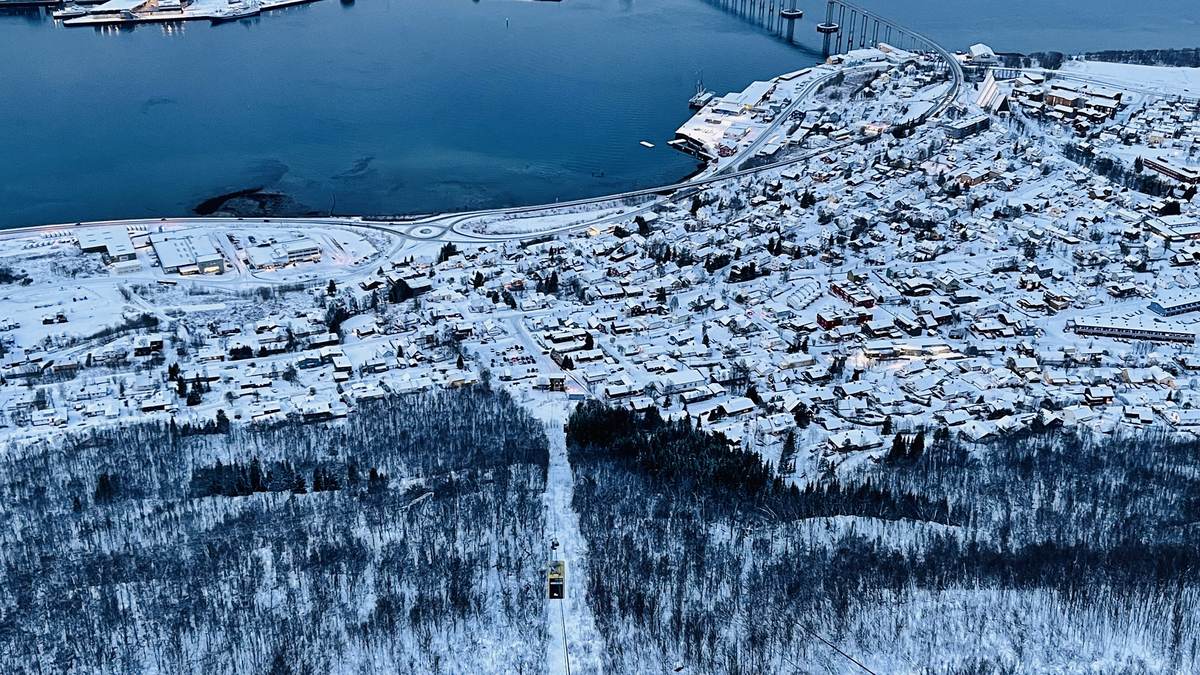
Tromsø sits at 69.7°N — about 350 kilometres above the Arctic Circle. Winter here lasts roughly six months, from the first snowfall in October to the last snowmelt in May. The city stays open and functional throughout: the airport runs, the buses run, and the restaurants serve. What changes are the light, the temperature, and what’s possible to do outdoors?
Three things define the season:
The light cycle. Tromsø goes from full daylight in summer to no daylight at all in winter, and the change is dramatic. By late November, the sun stops rising entirely. By mid-January, it returns. The transition months on either side are characterized by very short days — sometimes only two or three hours of pale blue light.
The cold. Tromsø is colder than its latitude suggests, but warmer than most people expect from “the Arctic.” The Gulf Stream keeps winter temperatures milder than those in inland Arctic regions. Average winter highs sit between -2°C and -5°C (met.no), with occasional cold snaps reaching -15°C or lower.
The snow. It typically arrives mid to late October and stays until April or May. Snow depth peaks in March and April, not December. The streets are gritted and ploughed continuously, but Tromsø feels genuinely Arctic for the entire winter.
Three winters in one
This is the part most guides miss, and it’s the single most important thing to understand before booking.
Early winter — October to mid-November
Snow usually arrives between mid-October and early November. Daytime temperatures range from 0°C to 5°C, dropping below 0 °C at night. By the 1st of November, you have just over six hours of daylight; by the 15th of November, you have around three to four hours (timeanddate.com).
What’s good about early winter:
The aurora season is fully open, with darker nights than in September. Snow is fresh and dry when it does arrive. Tromsø is quieter than in peak winter. Restaurant bookings are easier. Hotel rates are lower than in December and January.
What to know:
Activities that require stable snow cover, such as snowmobile tours and dog sledding, sometimes can’t run reliably until early November. Whale season starts around early November and peaks in December–January. The light shifts fast: a trip arriving on the 25th of October is very different from one arriving on the 5th of November.
This is the part of winter we’d send a first-time visitor to if they had flexibility. The atmosphere is already there, and you avoid both the holiday crowds and the deepest dark.
Polar night — late November to mid-January
The official polar night in Tromsø runs from 27 November to 15 January (met.no). During this period, the sun does not rise above the horizon. The surrounding mountains extend the practical darkness by about a week on each side, so the sun is effectively absent from roughly the 21st of November to the 21st of January.
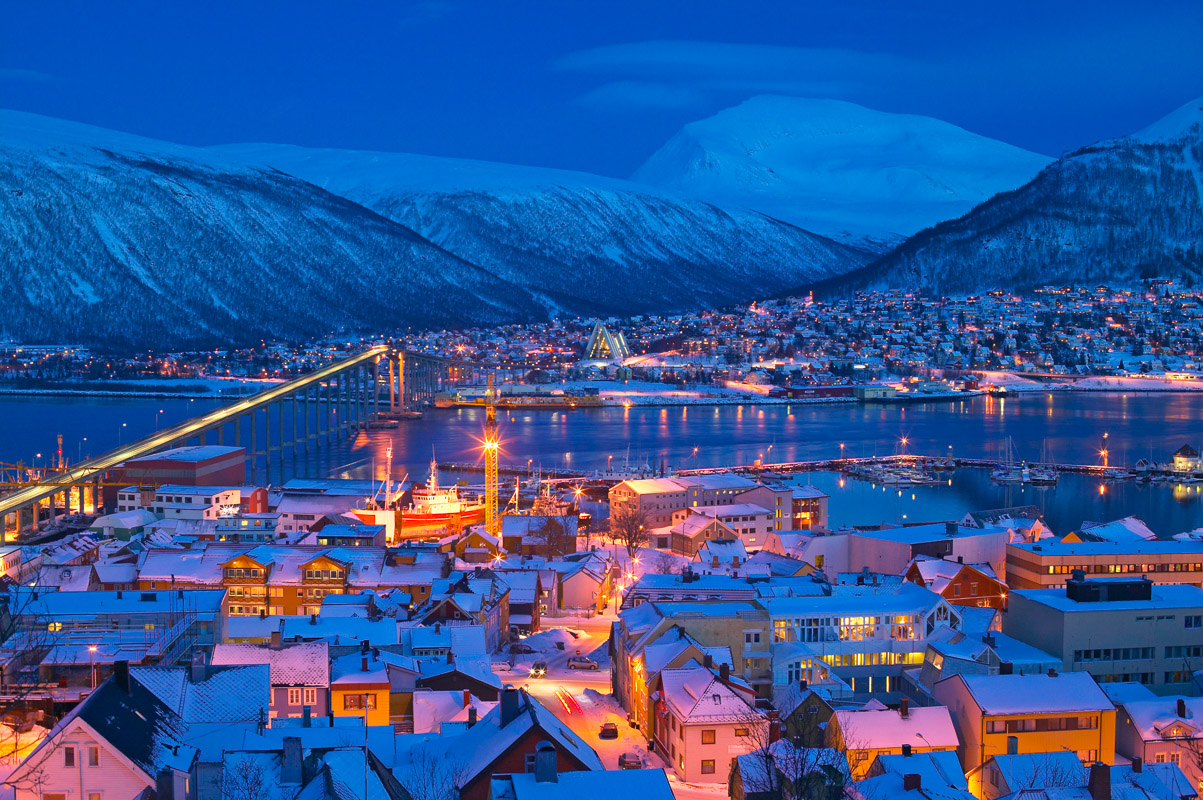
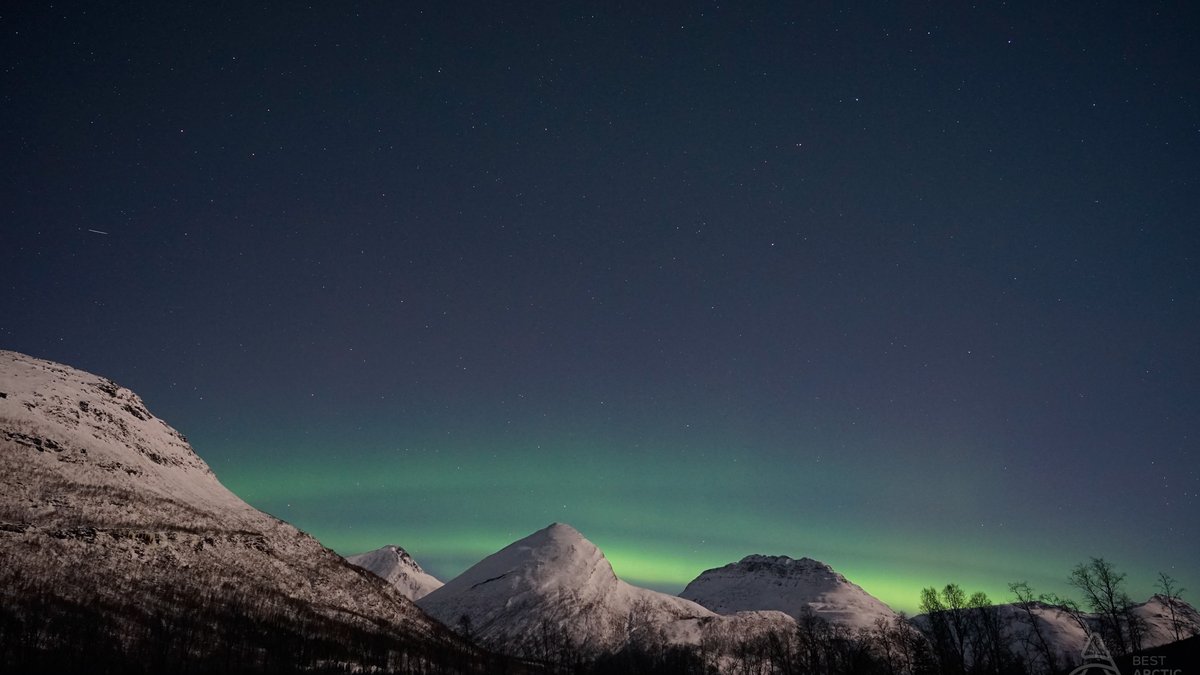
What this actually looks like: from approximately 09:00 to 14:00 each day, you have a long blue twilight. The sky brightens, the snow takes on shades of pink and lavender, and the city is functional in soft, reflected light. Headlights stay on. By 15:00, full darkness has returned. Locals call this mørketid or the dark time.
What’s good about polar night:
The longest aurora window of the year — dark from afternoon to morning. The most atmospheric Tromsø, soft light, falling snow, and an illuminated harbour. Tromsø International Film Festival (TIFF) runs in mid-January. Christmas in Tromsø is genuinely something different — without the word “magical” being misused. Whale watching is also at its peak.
What to know:
The lack of sunrise affects some people: disrupted sleep, lower energy. Plan for shorter outdoor sessions. Cold snaps are most likely during this period, occasionally reaching -15°C to -20°C. Tromsø is at its busiest from December through January — book early. Some guests find the constant darkness harder than they expected. Others find it the most beautiful experience of their trip. It’s worth being honest with yourself about which type you are.
The guests who love polar night most are the ones who came knowing what it was. The ones who struggle are the ones who’d booked thinking it would be “winter Tromsø” without realizing the sun wasn’t going to rise.
For visitors who want to fit as much of Tromsø winter into one trip as possible — northern lights, dog sledding, fjord drives — our Tromsø Northern Lights & Arctic Adventure is the five-day package built around that. It works in any part of winter, but the long darkness of polar night gives it more aurora windows. For specific changes or a longer trip, speak to the concierge team.
- Photo by CarolinBright winter — mid-January to late March
The sun returns to Tromsø on the 21st of January, give or take a day depending on cloud cover (timeanddate.com). Locals celebrate it — there’s a tradition called Soldagen (Sun Day) on the 21st of January, where the city stops to mark the moment.
After that, daylight comes back fast. By mid-February, you have nearly eight hours; by mid-March, twelve. Temperatures stay cold — February is often the coldest month — but the light makes everything easier.
What’s good about bright winter:
Daylight to enjoy outside the aurora window. Snow conditions at their best — deep, stable, well-tracked for cross-country, ski touring, dog sledding. Aurora is still active, with cleaner cold-snap nights producing the strongest displays. The harbour, the cathedral, and Storsteinen all photograph differently in bright winter light than in the dark season.
What to know:
February and early March are when the cold is most consistent, sometimes dropping to -10°C or lower for two weeks at a time. Easter is the quietest week of winter in Tromsø — Norwegians leave the city for the mountains and cabins, and many restaurants and shops close. If you want a quiet, almost-empty Tromsø, book for Easter week. If you want a busy city, avoid it. Bright winter is the best season for guests who want winter scenery but find the dark season disorienting.
For someone new to Tromsø who wants the most balanced winter experience, the first three weeks of March are the part of the season that delivers across most criteria — daylight, snow, aurora odds, and quieter logistics. Families travelling in this window often choose our Tromsø Family Winter Holiday, which is built around children’s energy and daylight rather than adult-focused aurora chases.
The aurora question
The aurora — also called the Northern Lights — is what brings most winter visitors to Tromsø. It’s worth being clear about how it actually works.
Tromsø sits directly under the auroral oval — the ring of activity that surrounds the magnetic north pole (UiT Space Weather). This means even moderate solar activity (KP index 3–4) produces visible aurora here, while the same activity wouldn’t be visible from southern Norway or the UK. Statistically, an aurora is possible on any clear night between September and March.
The variable isn’t the aurora itself. It’s the weather.
Tromsø’s coastal climate produces frequent cloud cover, especially from late November through January. On a cloudy night, no amount of solar activity will help. This is why aurora chases work — guides drive away from local cloud, sometimes 100 km or more, to find clear sky. On a good night, this is a 90-minute drive. On a bad weather night, it can mean crossing the Finnish border.
For real-time aurora forecasting, the most reliable sources are NOAA’s Space Weather Prediction Center (swpc.noaa.gov) for the global KP index, and UiT’s local forecast for cloud cover over Northern Norway.
Three things matter for your aurora odds:
The most important factor is how many nights you have in Tromsø. More nights, more chances. Three nights give you a fighting chance; five nights give you very good odds; seven nights or more make it almost a certainty throughout the season.
Whether you go with a guide or not. Guides watch the cloud forecast in real time and drive to gaps. Self-drive aurora hunting in winter conditions on icy roads is not advisable for most visitors.
The time of the season. Early November and late February tend to have clearer skies than mid-December. Polar night offers the most darkness but also the most unpredictable weather.
What doesn’t matter much: the moon phase (Tromsø aurora is bright enough to be visible during full moon), the exact KP forecast app you use, or the time of night within the dark window. For a deeper read on aurora science, viewing locations, and photography settings, see our full Northern Lights guide.
What to do in winter
Most winter guests focus on three or four core activities. Here’s the practical version. We work with Best Arctic for most of these — they run the operational side of the activities, and we focus on the trip design and concierge support around them.
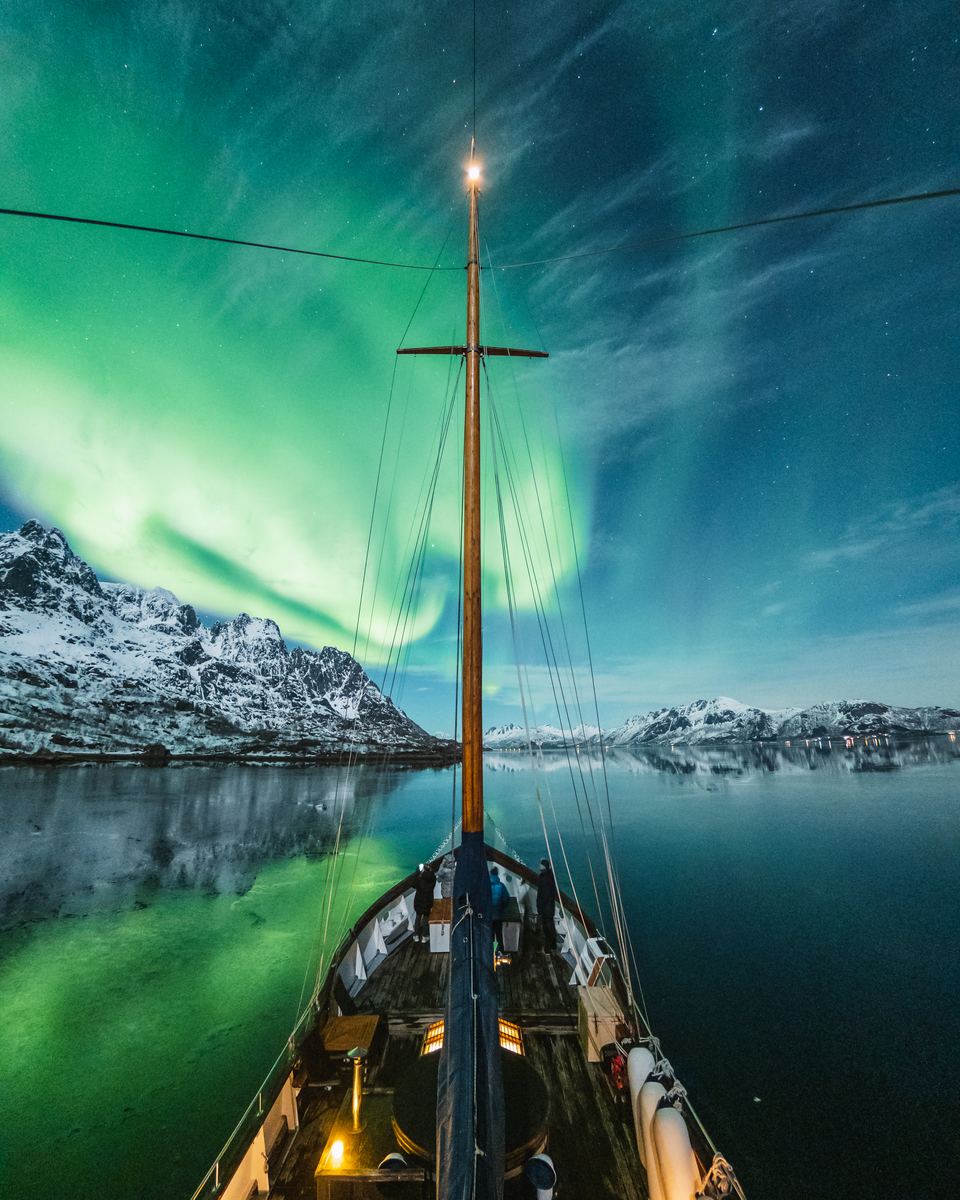
Aurora chasing. Guided minibus tours are the standard option, and they work. Boat-based aurora cruises are quieter and more atmospheric but limited to nights without strong winds. Hot tub aurora experiences are gimmicky in the wrong hands and exceptional in the right ones — it depends entirely on the operator.
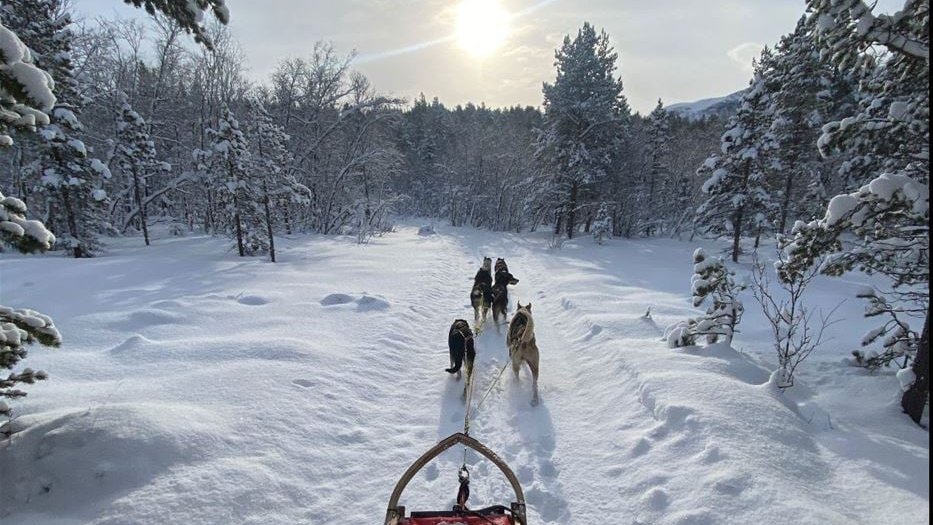
Dog sledding. Real winter activity, available roughly from mid-November through early April, depending on snow. The trail experience matters more than the dog count — a 90-minute trail ride with a small team is better than two hours behind sixteen dogs on a flat track.
Whale watching. High season in Tromsø is November through January. Best Arctic operates hybrid-electric vessels that are quieter than diesel boats — better for the whales and the experience.
Sami cultural visits. Reindeer feeding, lavvo dinners, and joik are offered through Sami-owned operations. Choose carefully — there’s a difference between authentic family-run experiences and tourist-staged ones. We carefully select Sami-owned partners and don’t work with tourist-staged reindeer experiences. If a Sami visit is the centrepiece of your trip, our Sami Reindeer & Northern Lights Tromsø package is built around it — the Sami family visit is the main event, not an add-on.
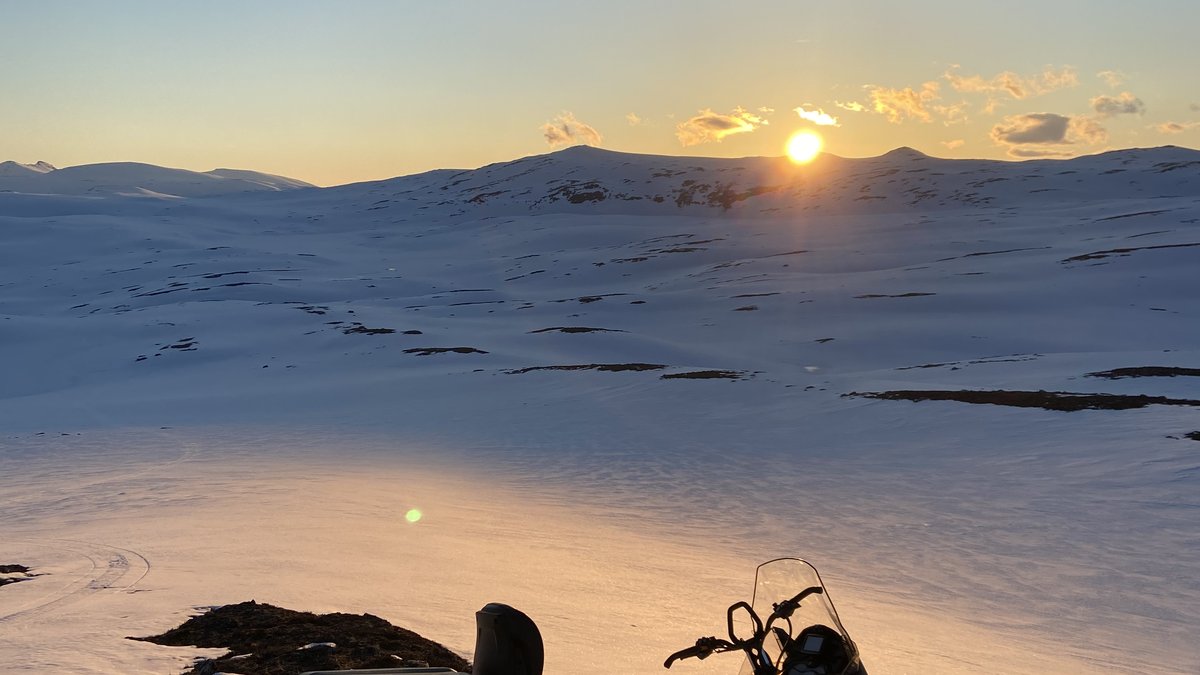
Snowmobile tours. Available from December through April. Lyngen Alps tours are dramatic; closer Tromsø routes are more accessible.
Fjellheisen. The cable car up to Storsteinen takes seven minutes. From the top, you see the city, the fjord, and the mountains laid out below. It’s my favourite spot in Tromsø — and the one winter activity I’d recommend anyone to do if you want to visit Tromsø.
When to come, depending on what you want
A short version:
Aurora trip: The best odds for seeing the Northern Lights are early to mid-November and the first three weeks of March. Clearer skies, lower crowds, and a real winter atmosphere.
Polar night experience: Late November through mid-January. Come knowing what you’re choosing.
Christmas / New Year in Tromsø: Book by August at the latest — earlier if possible. Hotel availability is the bottleneck, not activities.
Family with children: February or March. Daylight makes outdoor days possible without small kids getting cold and tired by 14:00.
Photographers: Polar night for aurora and blue hour, late February for landscape light.
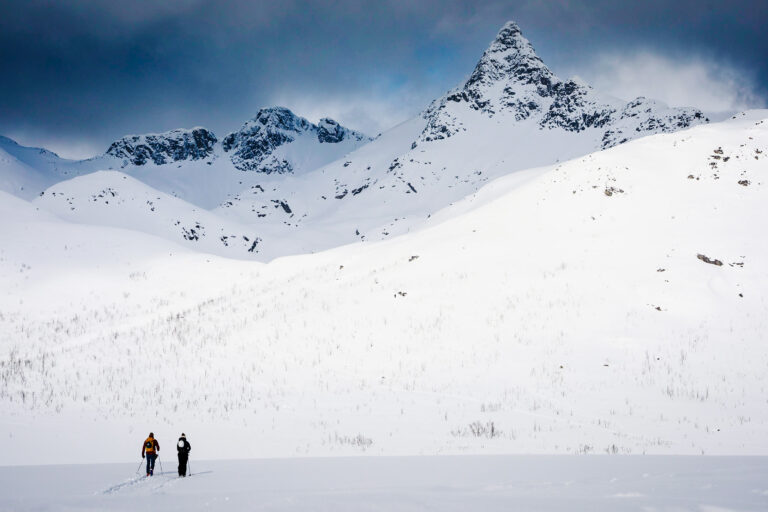
Ski touring or cross-country: Mid-January through March. Snow is stable, daylight is generous.
Easter week. Tromsø is quiet and almost empty this week: locals leave the city for the mountains, and most restaurants and stores are closed.
A note on packing
The biggest mistake winter visitors make is bringing the wrong clothing — usually too much synthetic insulation and not enough layering.
The Norwegian system: wool base layer (not cotton), fleece or wool mid layer, windproof and waterproof shell. Add or remove layers as needed. You’ll frequently move between -10°C outside and +22°C inside, and a single thick coat doesn’t handle that range.
What you actually need:
Wool base layer top and bottom (merino is ideal), fleece or down sweater, windproof and waterproof shell jacket, insulated waterproof boots that are mid-calf with real grip, wool socks, a hat, gloves, and a scarf or buff, and microspikes or crampons for icy mornings — Tromsø sidewalks freeze hard (I have learned this the hard way several times).
What you don’t need:
Arctic expedition parkas (Tromsø isn’t that cold for that long), three layers of cotton (cotton stays wet), or snow boots from a country that doesn’t have winters (most don’t have the grip you need here).
You can find more details on packing and what to wear in our guide section.
What we handle for our guests
Most of the logistics that go wrong on a Tromsø winter trip come from the same source: too many separate bookings, none of them coordinated.
Activity from one operator. Hotel from a third party. Airport transfers on the spot. Restaurant reservation forgotten. When the aurora chase is moved from 21:00 to 22:30 due to weather, the 19:00 dinner reservation didn’t account for it. When the dog sled tour is cancelled due to warm rain, and no one books a replacement activity.
We handle everything as a single coordinated trip — hotel, activities, transfers, restaurant bookings, and fallback plans for weather. Our HD Arctic winter packages cover the standard combinations. For more specific requests, the HD Arctic Concierge builds the trip around what you want.
Winter is one half of the year here. For the other months when the sun never quite sets, read our guide to Tromsø in summer.
You don’t have to book with us to use this guide. But if you’d prefer that someone in Tromsø handles the connecting pieces, that’s what we do at HD Arctic.