We get the same email a hundred times a year. We’re flying to Tromsø in November — what are our chances? The honest answer is: better than almost anywhere else on Earth, and still not guaranteed. The aurora is a natural phenomenon. It does what the sun and the weather decide. Our job is to be in the right place when it happens.
This guide is the long version of that answer. When the season runs, where to look, how to read a forecast that actually means something, and what the lights really look like when they appear. We’ve watched the aurora over Tromsø for years between the two of us. Most of what’s written below is what we tell our own guests on their first call.
When can you see the northern lights in Tromsø?
The aurora season in Tromsø runs from late August to early April. The reason is simple: you need darkness, and Tromsø spends mid-May to mid-July under the midnight sun, when the sky never gets dark enough.
Not all months feel the same within the northern lights season:
Late August to mid-September is the soft opening. Nights are just dark enough, usually after 22:00, and the temperatures are mild. Crowds are thin. Hotel prices are lower. The trade-off is shorter viewing windows.
Mid-September to October marks the autumn equinox. Nights lengthen quickly, and geomagnetic activity tends to spike around the equinoxes. The mountains turn red and gold by day, and the aurora often shows up against an autumn landscape rather than snow. Some of our most photogenic nights of the year happen in October.
November to February is peak season. Polar night begins around the 27th of November and ends around the 15th of January, which means up to 24 hours without proper sunrise. Statistically, this is when the lights are strongest and most often visible. The long darkness simply gives you more chances per night.
March to early April is a sweet spot. Nights are still long enough, the spring equinox brings another activity peak, the storms of midwinter have usually passed, and the skies tend to be clearer. Snow is still on the ground. We often book our own family trips in late February or early March for this reason.
There’s no single best month. According to Visit Tromsø, the aurora “often dances” from late August to early April, and the difference between November and February is small — both work. What matters more than a month is staying long enough to outlast the weather. Three to five nights gives you a real chance. One night is a coin flip.
Best time of night
Within a given night, the active window in Tromsø is roughly 21:00 to 02:00, with the strongest displays typically between 22:00 and midnight. The sky needs to be dark first, that’s usually 18:00 to 20:00, depending on the time of year, but the aurora itself follows magnetic midnight more than it follows the clock, and Tromsø sits within the auroral oval, where activity is highest.
Don’t go to bed at 22:00 because nothing’s happened yet. Aurora doesn’t owe you anything before it’s ready.
How the aurora actually works
Without the science, the rest of this guide doesn’t quite click. Here it is in four paragraphs.
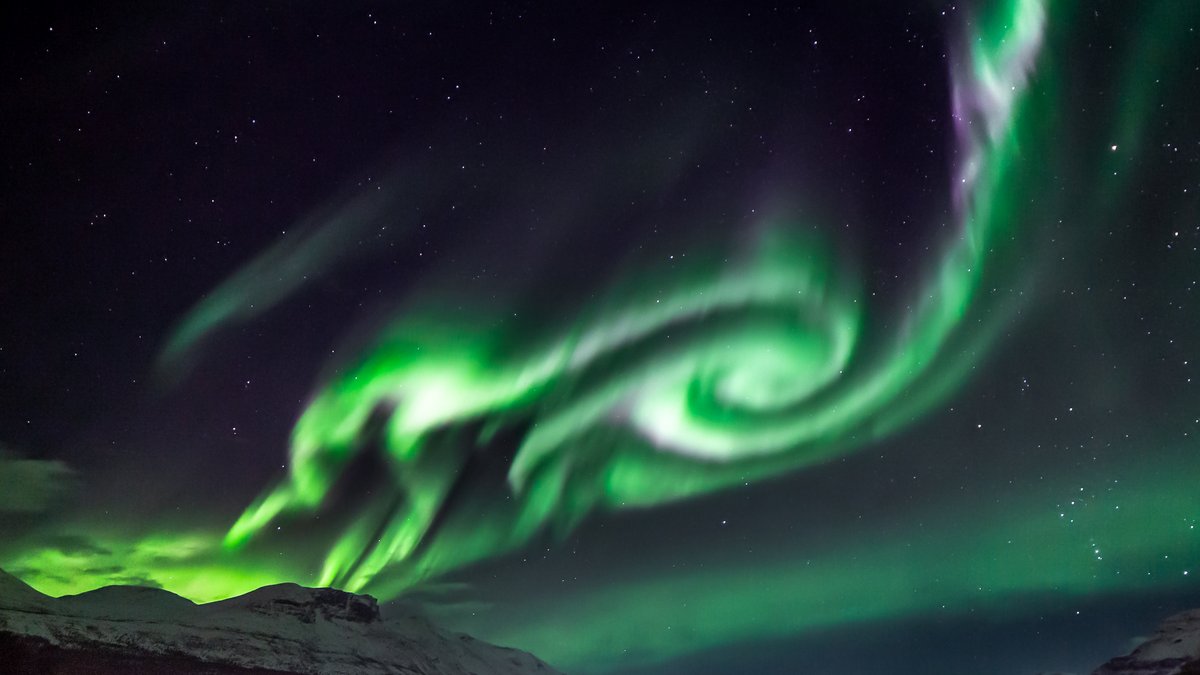
The sun constantly throws charged particles into space. A stream called the solar wind. When those particles meet Earth’s magnetic field, most of them are deflected around the planet. Some are funnelled toward the poles, where they collide with oxygen and nitrogen atoms in our upper atmosphere, at altitudes of 100 to 300 kilometres. The collision excites the atoms, which release energy as light. Oxygen typically gives green and red. Nitrogen gives blue, pink, and purple.
The reason Tromsø sees so much of it is geographical: we sit directly under the auroral oval. A ring-shaped band around the magnetic pole where particle collisions happen most often. The oval is fixed relative to the sun, not the Earth, so as the planet rotates, different cities pass under it. Tromsø is one of the few places where you’re under the oval almost every night of the dark season.
That’s also why people often ask whether the aurora is visible in the middle of the day during polar night. The answer, according to researchers at UiT — The Arctic University of Norway, is yes and no. Aurora happens around the clock, but you only see it when the sky is dark enough. Even during polar night (the seven-week phase from late November to mid-January, when the sun never rises above the horizon). The few hours of midday blue twilight wash out all but the strongest displays.
Solar activity rises and falls in roughly 11-year cycles. We’re in a strong cycle now, with solar maximum peaking around 2024–2026 (NOAA Space Weather Prediction Center). That means stronger and more frequent auroras through 2026 and 2027 than the average decade. It’s one of the reasons this winter has felt particularly active for our guests.
Where to look — best viewing locations near Tromsø
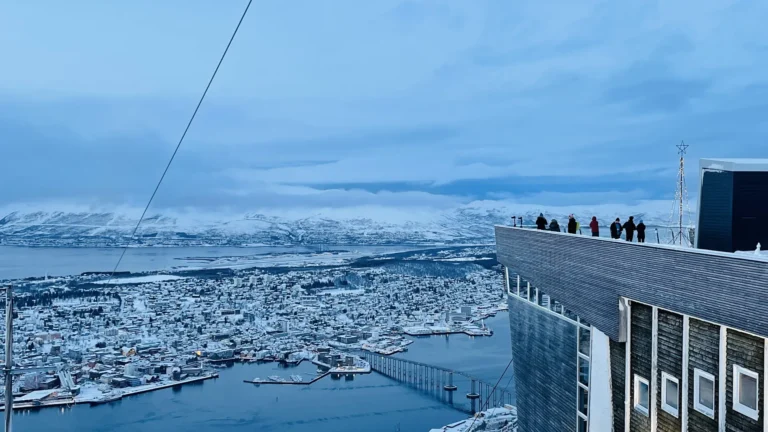
You can sometimes see the aurora from the city centre, especially during strong displays. But Tromsø has streetlights, which blunt your eyes’ ability to pick up faint colours. Almost every photograph you’ve seen of “Tromsø northern lights” was taken outside the city, away from artificial light.
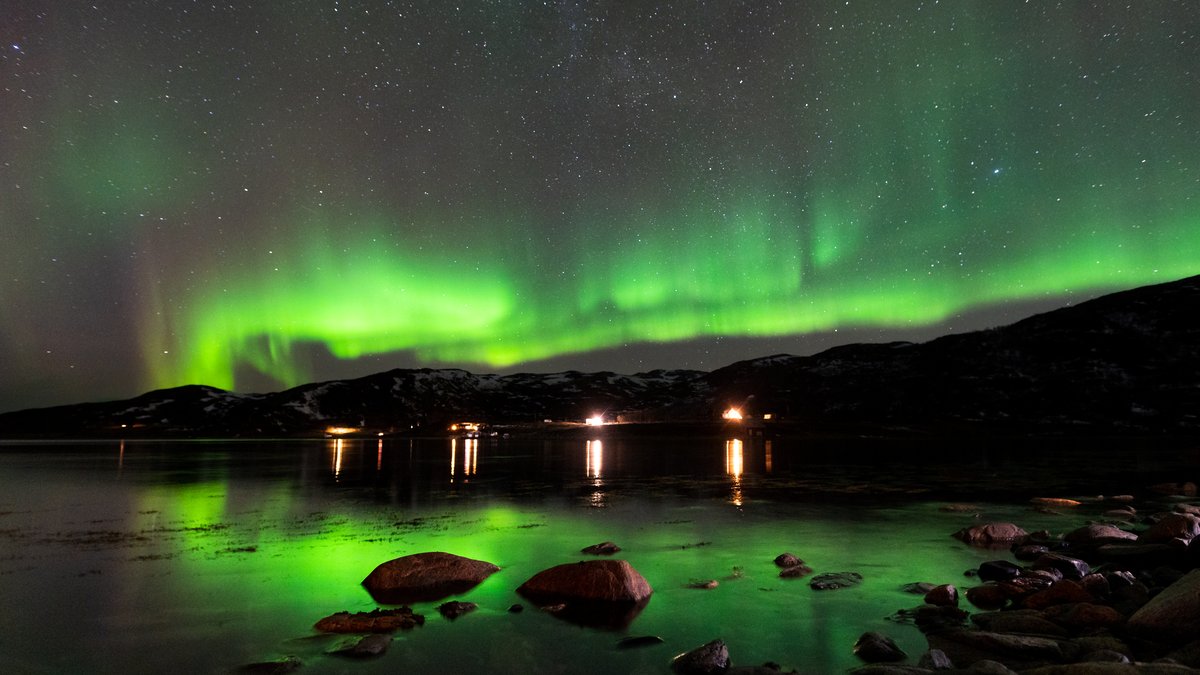
A few places we use, in roughly increasing order of effort:
Telegrafbukta
A small bay on the south end of Tromsøya. A 15-minute drive from the city centre. Good if you’re staying in town and don’t want to commit to a full chase.
Prestvannet
A small lake on the high ground of the island, with low light pollution and good views in most directions. Walking distance from central neighbourhoods.
Kvaløya bridge and beyond
Cross the bridge to the larger island of Kvaløya, and you find dark fjord roads with mountains on three sides. Ersfjordbotn is a popular spot, about 30 minutes out. The mountain backdrops make the photos even better.
Skibotn and the Lyngen direction
East of Tromsø, an hour or more by road. Skibotn sits in a “rain shadow” between mountain ranges and often has clearer skies when Tromsø is overcast. This is where most professional aurora chase guides head when the city is socked in.
The fjord
Boat-based aurora viewing. The water is dark, the boat puts you away from light, and on calm nights, the reflection doubles the show. Our preferred Northern Lights experience is on a hybrid-electric boat that runs near-silently, leaving the night undisturbed.
The general rule: drive away from city light, point yourself north, and find a horizon you can see. The aurora often starts as a faint band on the northern horizon before it expands.
Reading the forecast — KP-index, cloud cover, and what they actually mean
Most aurora apps show two numbers: a KP-index forecast and a cloud cover map. Both matter, but they don’t matter equally for everyone, and most travellers misunderstand what KP means.
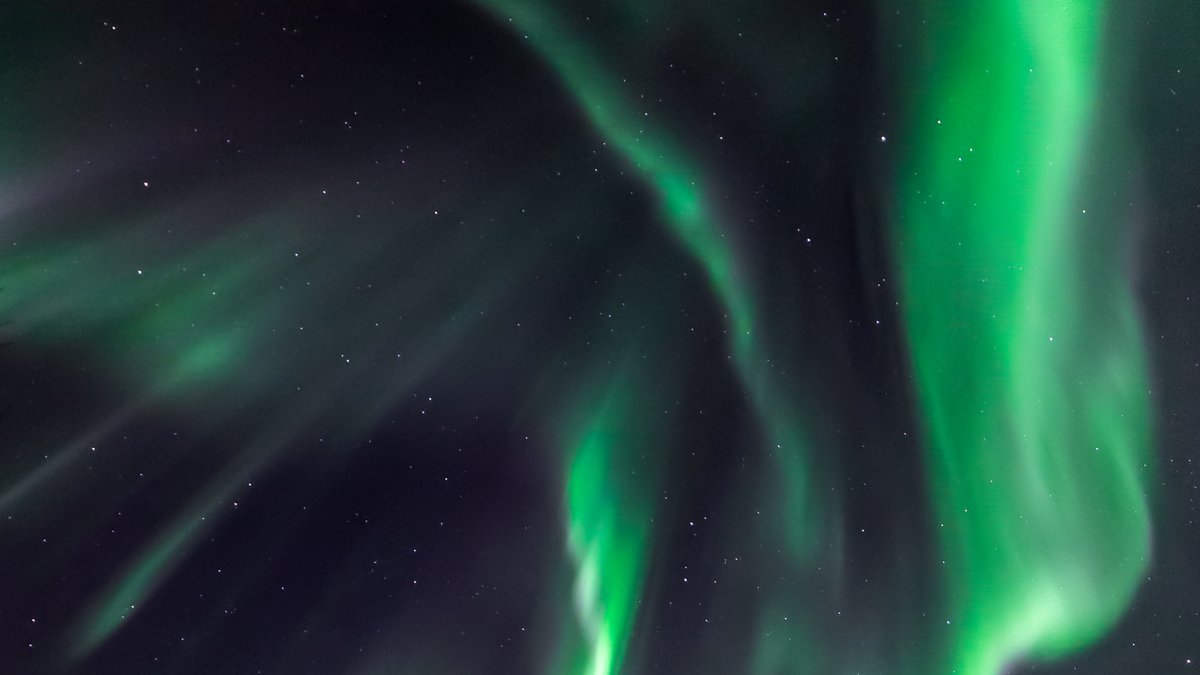
The KP-index is a global measure of geomagnetic activity on a scale from 0 to 9. It tells you how far south the auroral oval is reaching that night. At KP 0–2, the oval is concentrated near the poles. At KP 5+, it expands south enough that you can see the aurora from much of Northern Europe.
The mistake travellers make is thinking they need a high KP to see anything in Tromsø. They don’t. Tromsø sits inside the oval at KP 1–2, which means even on a “quiet” night, the aurora is overhead. Polarforecast and other Tromsø-specific services note that KP 3+ often gives strong visibility from Tromsø, but you can absolutely see the lights at KP 1.
What you actually need is two things: enough geomagnetic activity to produce a visible display (KP 1+ in Tromsø) and a clear sky to see it through.
This is where cloud cover does most of the work. We’ve seen wildly active nights with KP 6, including big substorms — where Tromsø was under solid cloud cover and we saw nothing. We’ve seen quiet KP 1 nights when the sky was glass-clear, and the aurora put on a show for 2 hours.
The forecasts we trust:
- yr.no for hyperlocal cloud cover (the Norwegian Meteorological Institute’s tool)
- NOAA SWPC for global geomagnetic activity
- Polarforecast and the official Norway Lights app for combined Tromsø-specific reads
The hardest forecasting skill is reading the cloud map well enough to drive to a clearer place. Skibotn: one hour; Kvaløya: thirty minutes; sometimes just the other side of Tromsøya. This is what guided tours actually do for you — they’re not promising aurora, they’re promising mobility.
What it looks like to the eye versus the camera
This is the conversation that catches most first-timers off guard, and it’s worth being honest about.
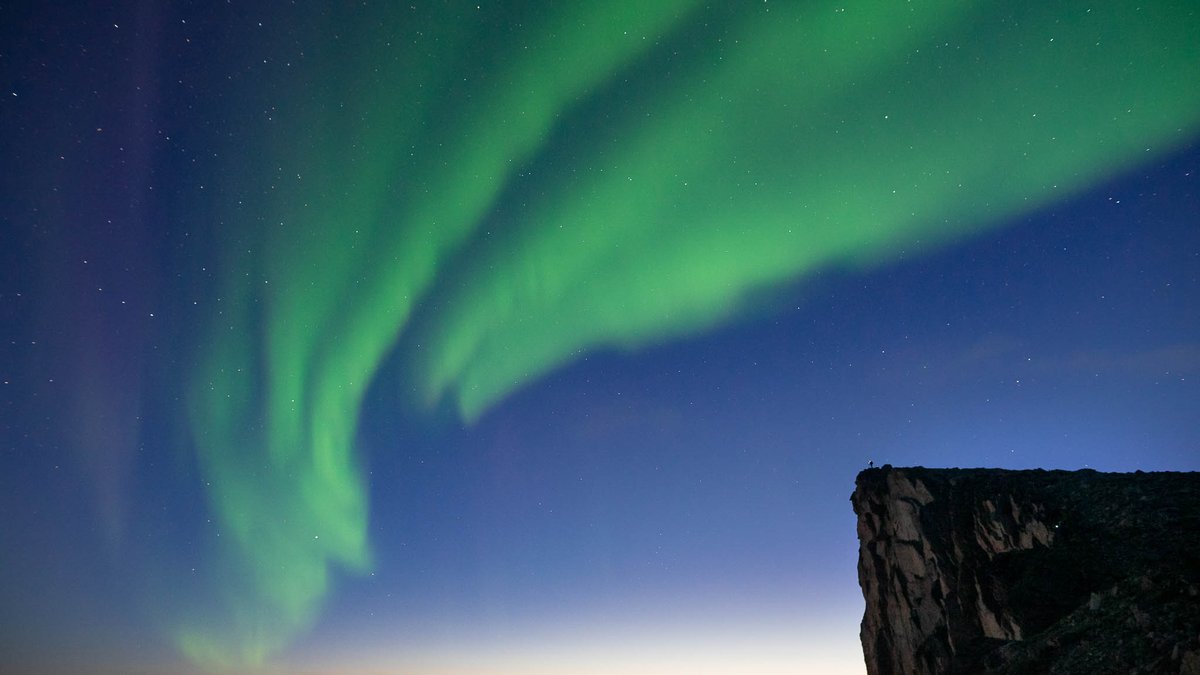
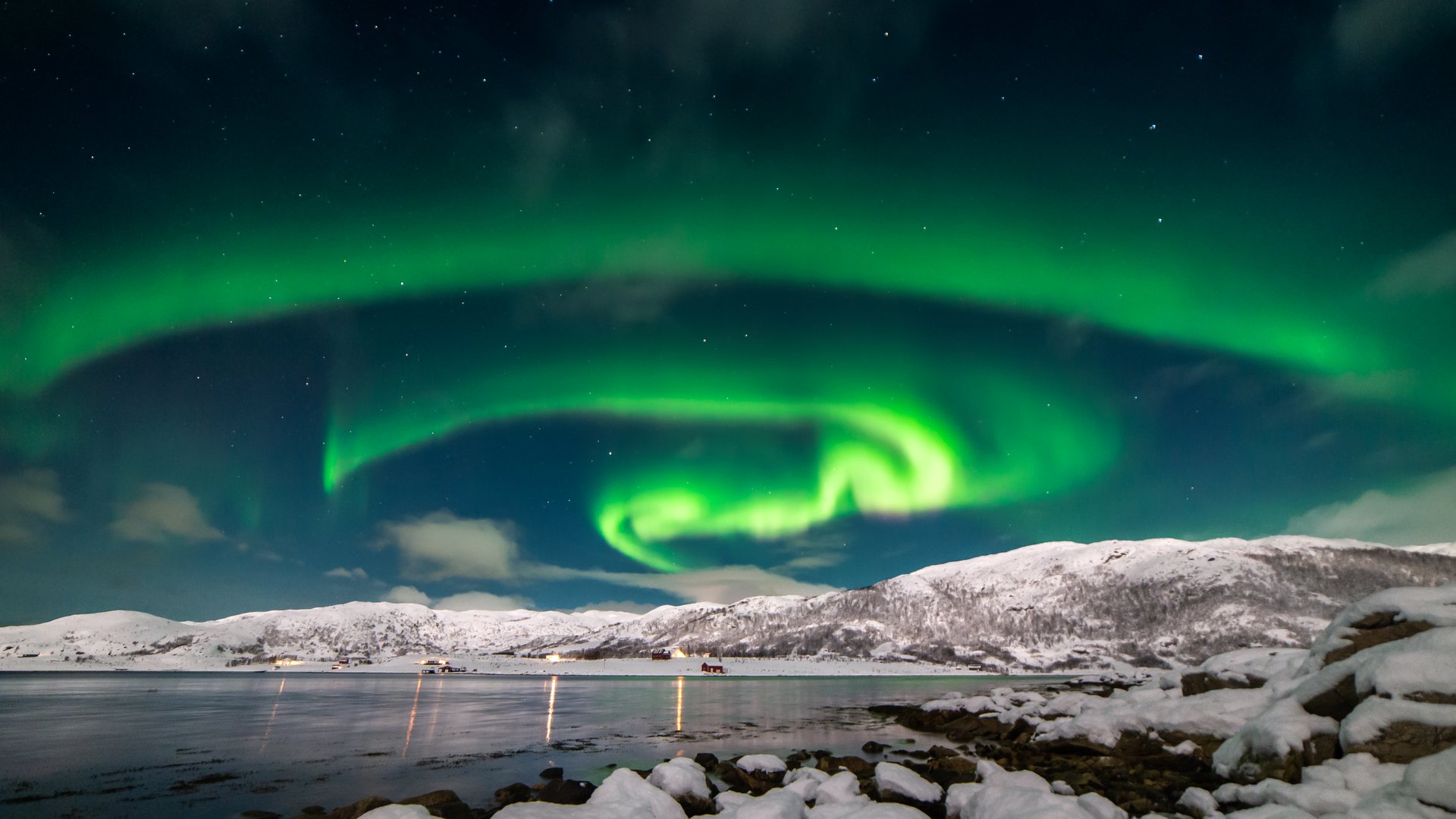
To the naked eye, weak to moderate aurora often looks like a pale grey or grey-green smudge on the horizon, sometimes mistaken for a cloud. Stronger displays show clear green movement, ribbons that shift and bend, and, on rare occasions, full-sky fills with red, pink, or purple flashes. The motion is the thing that gives it away — clouds don’t dance.
To a camera, especially a modern phone with a 6-second exposure, or a proper camera at ISO 1600 and a wide aperture, the same scene appears vivid green, often with red and pink at the edges. The camera collects more light than your eye does. This is why almost every “northern lights” photo you’ve seen looks more dramatic than the experience itself.
This isn’t a trick or a disappointment. Both are real. Your eye sees motion and structure that a camera can struggle to capture; the camera sees colour saturation that your eye doesn’t have the photoreceptors for. Watching the aurora is best when you let your eyes adapt for 10 minutes (no phone screens), then check the camera occasionally to confirm what’s actually happening above you.
A short photography note: manual focus set to infinity, ISO 1600–3200, aperture f/2.8 or wider, shutter 5–15 seconds, and a tripod or steady surface.
Aurora myths — and what the Sami have to say
Northern lights mythology is often packaged for tourists in ways that flatten the actual cultural histories behind it. Here’s what’s worth knowing.
In Sami tradition, the indigenous people of northern Fennoscandia, including the area around Tromsø. The aurora has carried meanings ranging from spirits of the dead to omens of significant change. Some Sami groups historically observed quiet around the lights, believing loud behaviour or whistling could provoke them. These are real cultural elements held by real living communities, not just content for folklore. If you book a Sami cultural experience in Tromsø, the family running it will share what they choose to share. Take their lead, not the version you read on a tour operator blog.
A few other myths and what’s actually known:
“You can hear the aurora.” Sometimes reported, hard to verify. Some atmospheric scientists at Aalto University in Finland have recorded faint sounds during strong auroral events, but the phenomenon is rare and not understood. If you hear something, you might be hearing something. Most nights you won’t.
“Aurora touches the ground.” No. The lower edge of typical aurora is around 100 km above the surface — far higher than any mountain or aircraft.
“Babies conceived under the lights are lucky.” A modern Japanese tourism legend, not a Norwegian or Sami belief. Tromsø welcomes the visitors it brings, but the tradition isn’t local.
“You can predict aurora seven days out.” No. Reliable forecasts are 30 minutes to 3 hours ahead. Anything longer is a general probability.
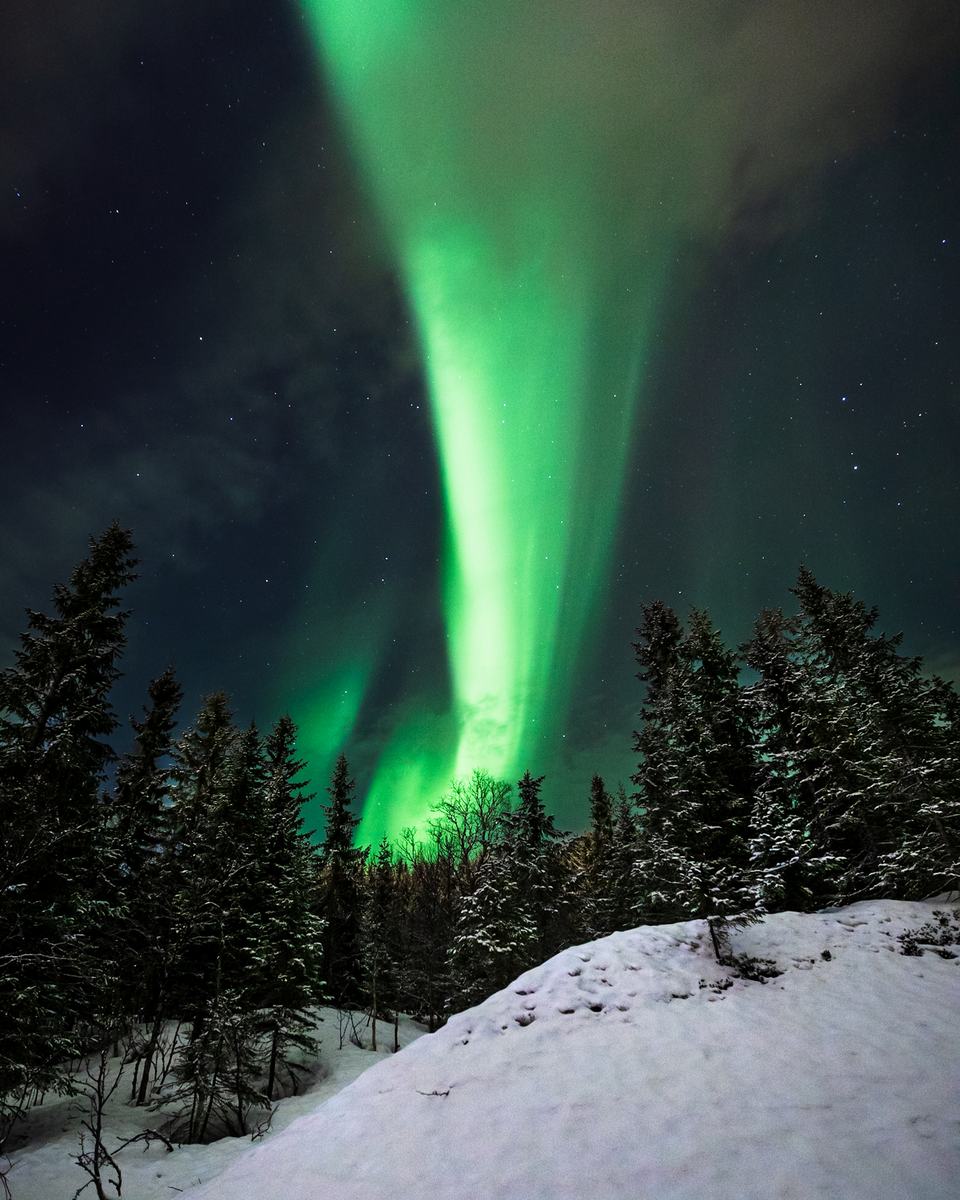
Tromsø’s aurora season month by month
A short read of each month, with links to deeper monthly guides as we publish them.
Late August / early September
First aurora of the season. Twilight nights, mild weather, bare or barely-snowy ground. Best for travellers who want a milder winter.
October
Equinox boost, autumn colour, dramatic sky-and-mountain combinations. Often clear weather. Photography heaven.
November
Polar night begins late in the month. Long nights, increasing snow, peak season starts. Festive Tromsø begins around the same time.
December
Full polar night. Christmas markets in Tromsø. Lots of viewing time per night. Statistically active, but variable weather.
January
Pure winter. The sun returns mid-month after the polar night ends. Crisp, often clear nights. (Our Tromsø in January guide for the deep version is coming soon.)
February
Peak winter, longest cold stretch, often the best snow. Aurora consistently active.
March
Spring equinox peak, longer days returning, often the clearest skies of the season. Many locals’ favourite aurora month.
Early April
Last weeks of the season. Light returns quickly, but on a clear night with strong activity, the aurora can still appear.
Mid-April to mid-August
Midnight sun. No aurora visible. Tromsø transforms entirely; we cover that in our Midnight Sun guide.
Northern Lights in Tromsø: FAQ
How many nights do I need to stay to see the aurora?
Three nights give you a realistic chance. Four to five gives you confidence. One or two nights is a gamble.
Is the aurora guaranteed if I book a tour?
Some operators offer a “guarantee”. They let you rejoin for free if you don’t see lights on your first night. Read the fine print. The aurora itself is never guaranteed; only the re-booking is.
Can I see the northern lights from my hotel room?
Sometimes on strong nights, from rooms facing north away from the city centre. Don’t plan around it. Plan to go outside.
What should I wear?
Wool or synthetic base layer, fleece mid-layer, windproof and insulated outer shell, wool socks, insulated boots, gloves, and a hat. You’ll be standing still in the cold for 30+ minutes at a time. Cotton stays wet and freezes; leave it at home.
How dark does it need to be?
Astronomical dark, ideally. In Tromsø, that means around 20:00 in early September, and almost any time after 16:00 in midwinter.
Can I see the aurora during the polar night?
In theory, yes, in practice, almost never. The residual blue twilight of polar night still scatters too much light. Wait for a proper night.
If you’re planning a Tromsø trip and want the full experience handled — hotel, transfers, an aurora chase that mobilises around the cloud cover, daytime activities for when you’re recovering from late nights. Our Northern Lights & Arctic Adventure package combines a five-night stay with whales, huskies and aurora across one trip.
The aurora is the rarest of the things we offer, in the sense that we can’t promise it. What we can promise is that we’ll be in the right place, with a guide who’s reading the same forecasts we read, on the right night.