Most guests arrive prepared for the Tromsø they have seen in photographs. Snow on the rooftops. Aurora over the fjord. A city in its winter coat. Then they arrive in June, and the city refuses to go to sleep at midnight, and they realize they have packed for a different country.
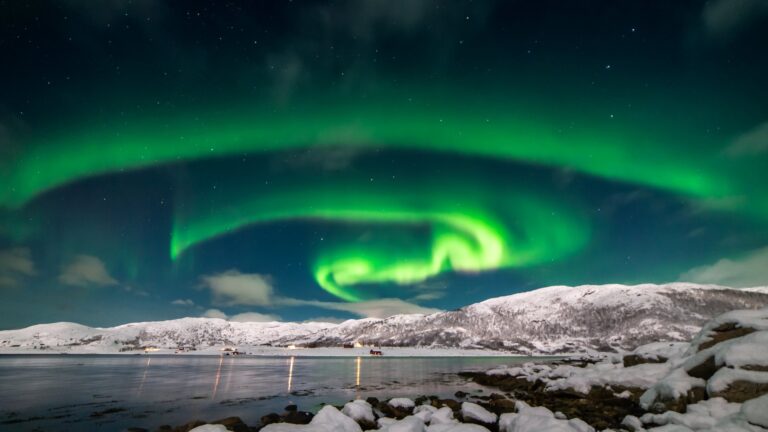
A group of guests, some summers ago, arrived in late June expecting to see the aurora and asked for a refund the next morning because the lights had not appeared. This sounds funny, but it is not really funny. They had paid serious money for a trip built on a misunderstanding nobody had corrected for them. The reality is that the aurora season ends in early April and resumes in early September. From late May to late July, there is no aurora in Tromsø, because there is no darkness for it to appear in.
This is the other half of the year. From mid-May to late July, the sun does not set in Tromsø. The sun doesn’t dim, dip below the horizon, or set. For around 63 consecutive days, the sky stays lit. Locals eat dinner at ten, climb mountains at midnight, and learn to sleep behind blackout curtains. Visitors usually need a couple of days before they understand what is actually happening to them.
This is a guide for those couple of days. What the midnight sun actually is, when it happens, what it feels like to live in 24-hour daylight, and how to plan a trip around the fact that the rules of time you grew up with quietly stop applying.
What is the midnight sun?
The midnight sun is what happens when you stand far enough north that the Earth’s axial tilt keeps you in continuous sunlight for weeks at a time. Tromsø sits at 69.65°N, well above the Arctic Circle (66.6°N), which is the latitude at which the phenomenon technically begins. The further north you go, the longer it lasts — in Svalbard, four hours north by plane, the sun stays up for over four months.
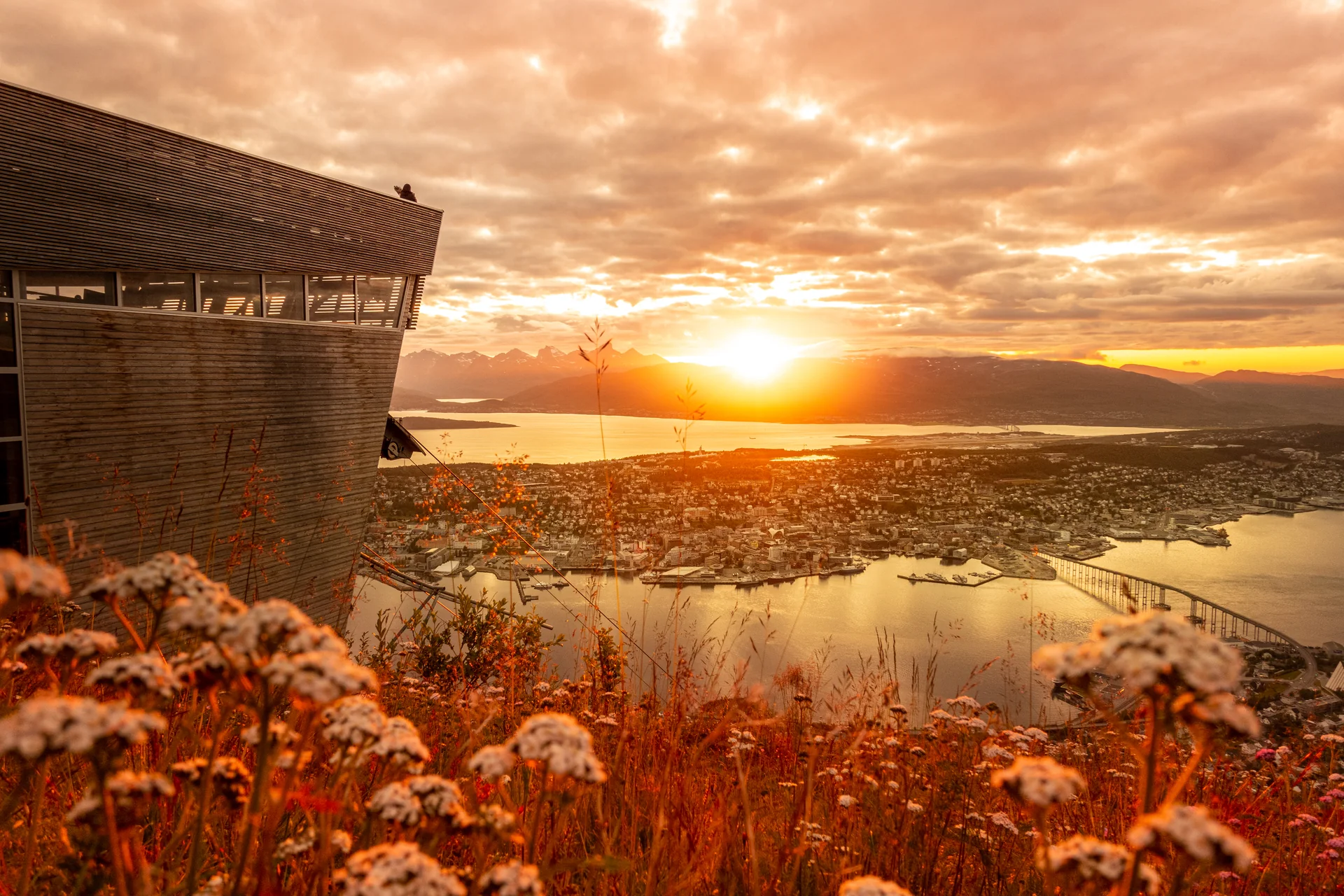
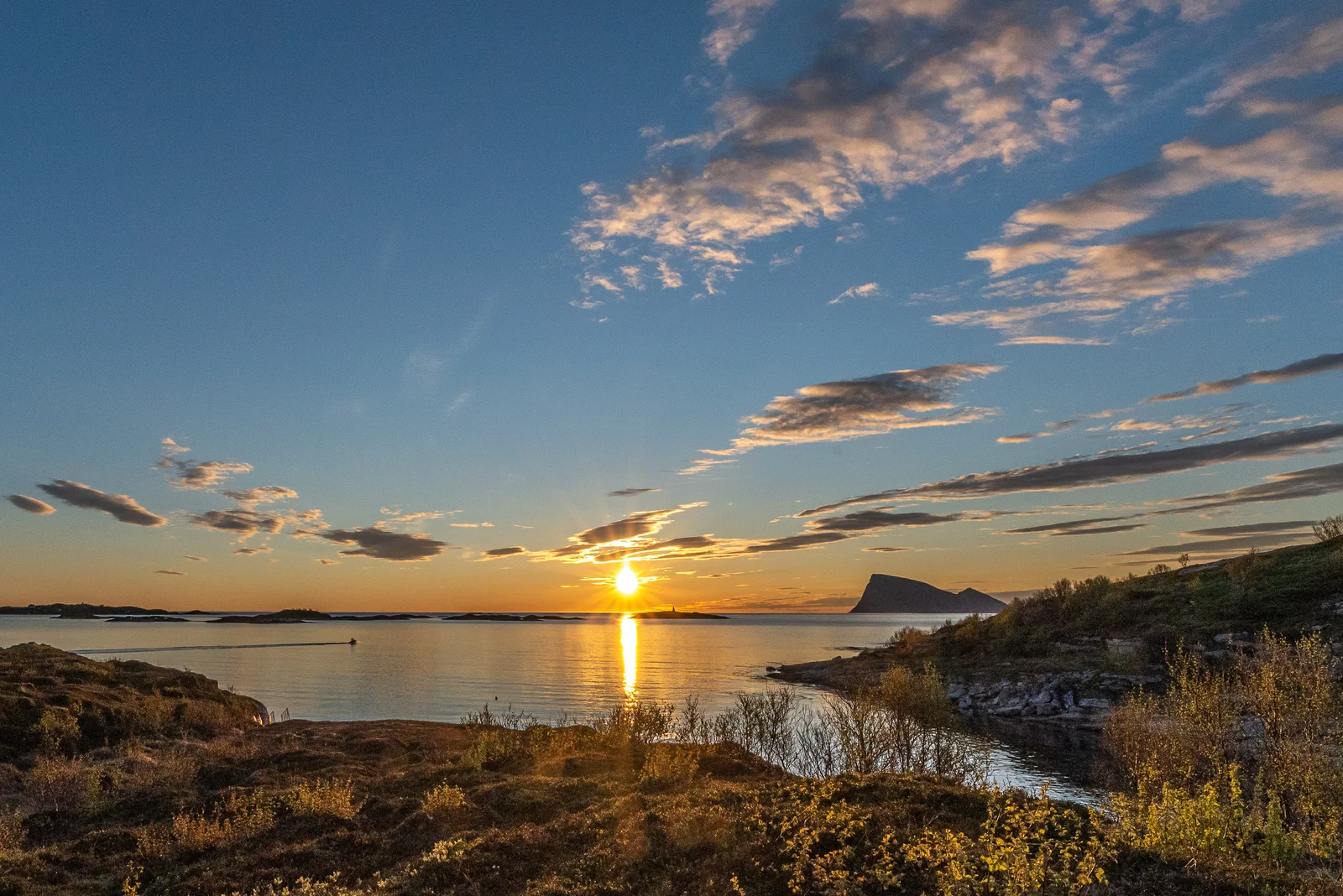
In Tromsø specifically, the official midnight sun period runs from 20 May to 22 July — about 63 days, with a few days of variation depending on the year (timeanddate.com). On the longest day, around the June solstice, the sun does a slow, low circle around the horizon. At what should be the deepest part of the night, it sits just above the northern skyline, gold and unmoving. In 2026, the solstice falls at 10:24 in the morning on Sunday, the 21st of June.
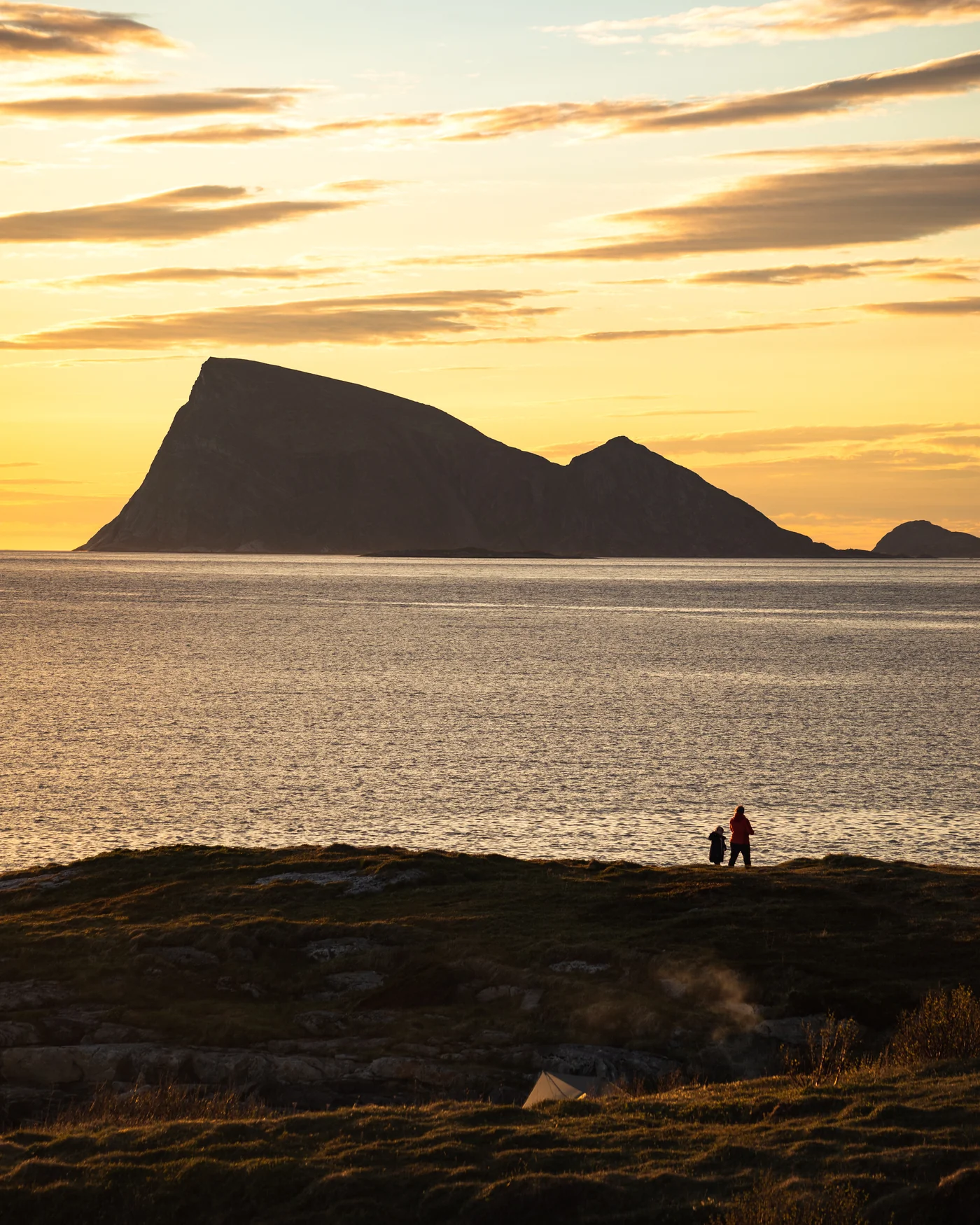
It is the same sun you see during the day. The colour, the quality of the light, and the angle are what change. Late-night midnight sun is more like a permanent golden hour than a daytime sky; it is softer, lower, and slightly amber. The Norwegian word locals use is ¨midnattsol¨. It does not have an English equivalent that quite captures it.
When is the midnight sun in Tromsø?
The midnight sun is not a single event. It builds up and trails off. Here is what is actually happening through spring and summer if you are planning a trip.
Late April to mid-May: pre-season light
In late April and early May, the polar night ended months ago. The days have been getting longer fast. Tromsø gains about eleven minutes of daylight a day in spring. By early May, the sky barely darkens at all between sunset and sunrise. We are not in the midnight sun yet, but the city is already lit at eleven at night. Locals start hiking again. This is shoulder season: quiet, cheaper than peak summer, and beautiful.
20 May: the sun stops setting
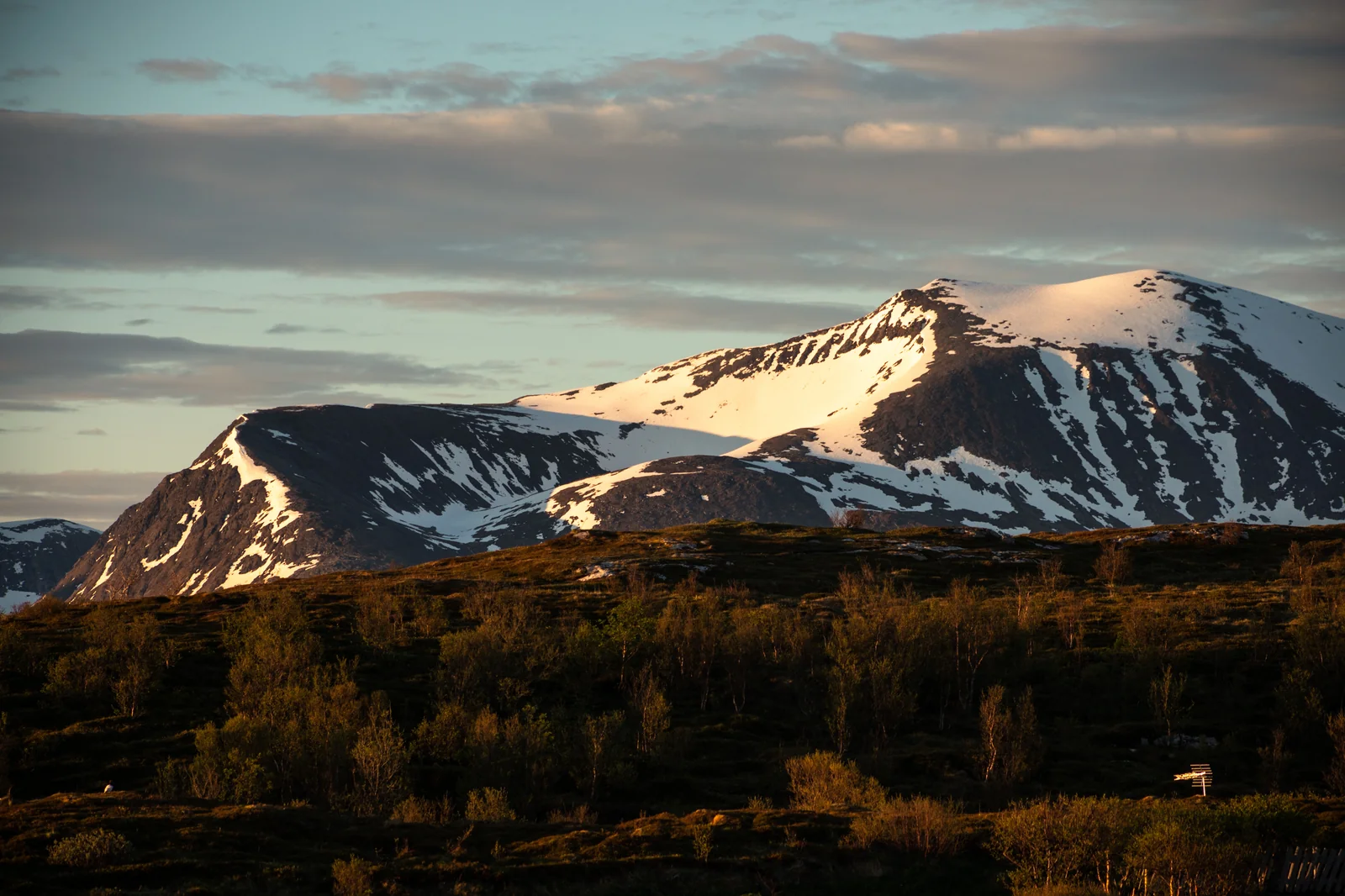
Around the 20th of May, the sun stops setting in Tromsø. From mid-May to mid-June, the light is endless but still moves through the sky. At what should be midnight, the sun sits low in the north, and the world looks like the last hour before sunset, for hours. The weather is cool, with daytime temperatures around eight to twelve degrees Celsius and nights closer to four to six degrees. Snow remains on the high peaks. The fjords are still cold. Aurora season is technically over, though we sometimes get a few last sightings in late May for guests who came expecting one thing and got the other.
21 June: the summer solstice
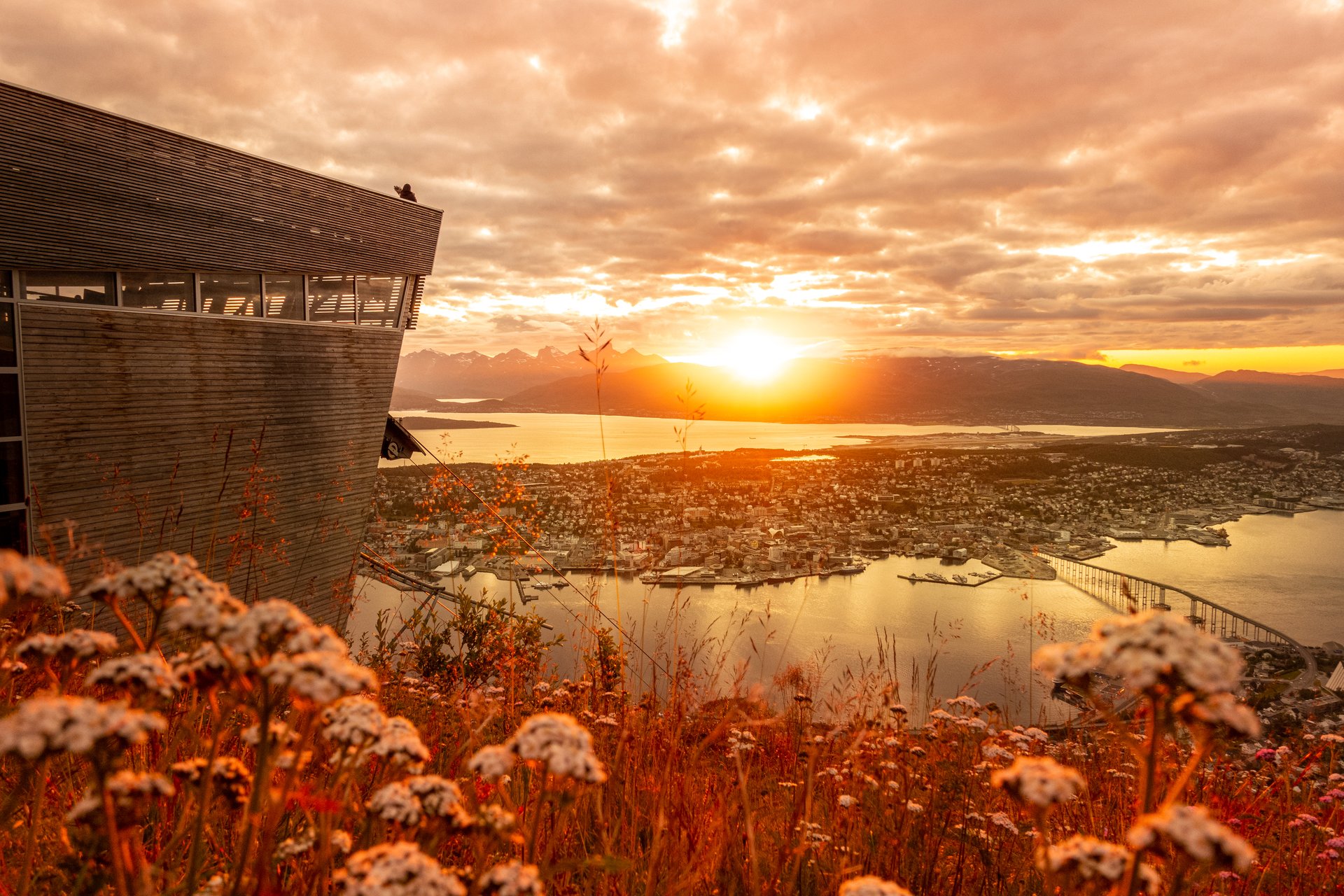
Around the summer solstice on 21 June 2026, the sun reaches its highest point in the sky for the year. From this point, the days will get shorter again, but you will not notice for weeks. This is when Tromsø feels most awake: late dinners, midnight hikes, the Midnight Sun Marathon on 20 June 2026 (the world’s northernmost AIMS-certified marathon, drawing over 6,000 runners from 88 nations), and the start of the festival season.
Early to mid-July: peak warmth
Early to mid-July is the warmest part of the year. Daytime temperatures regularly reach 13 to 18 degrees Celsius, occasionally higher. The sun still does not set, but you can feel summer in the air, as you would in a more southern country. The Bukta rock festival on the city beach (17–18 July 2026) is the event most locals build their summer around: rock, beer and seafood in Telegrafbukta, with the music carrying through the bright night.
22 July: the sun sets again
The sun sets again for the first time around 22 July. From there, darkness returns slowly. By mid-August, the nights are noticeable. By early September, the aurora season begins again, and we are back into the territory of the Northern Lights guide.
What 24-hour daylight actually feels like
This is the part most guides skip, and it matters most for planning.
The light is not subtle
The first thing to know is that the midnight sun is not subtle. It is bright. The light coming through a window at one in the morning is not soft evening light. It is strong enough to read books without a lamp. If your hotel room does not have proper blackout curtains, you will not sleep well on the first night. Most decent Tromsø hotels have them. Some apartments and short-term rentals do not. Check before you book.
Your sense of time disappears
The second thing is that your sense of time disappears within about forty-eight hours. Without the cue of evening light fading into night, your body forgets what time it is. You will look up, see what looks like late afternoon, check your watch, and find it is half past eleven. This sounds romantic, but in practice, it means people eat dinner late, stay up too late, sleep poorly, and feel slightly off for several days.
The trick is to set arbitrary anchors: eat dinner at the same time every night, dim the lights in your hotel room a few hours before you sleep, treat eleven at night as eleven at night, even though the sky disagrees. Locals do this without thinking. You will not, the first time you are here.
The city changes character
The third thing, and this is what most visitors do not expect, is that the city changes character. Tromsø in winter is quiet, internal, hushed by snow. In the midnight sun, it is the opposite. People are outside at all hours. Bars stay full past midnight. Children play on beaches at ten in the evening. The city runs on the light in a way that has to be seen to be understood.
It is not constantly warm
The fourth thing is that it is not constantly warm. This is the Arctic in summer, not the Mediterranean. Daytime highs in June and July typically range from 12 to 14 degrees Celsius, while nights cool to 6 to 8 degrees Celsius. The temperature for July at the coast sits around eleven to twelve degrees (Meteorologisk institutt). The sea remains cold throughout, around four to eight degrees in June and July.
Rain is part of the picture, too. Tromsø can shift from clear sun to low cloud and heavy showers within an afternoon, and June and July both have stretches that catch visitors off guard. Bring layers. The midnight sun on a clear evening is spectacular; the same evening with low cloud cover is grey and damp.
What to do when the sun does not set
This is where Tromsø in summer earns its place. Activities that exist in winter become different activities in summer, and there are things you can only do here in these few weeks.
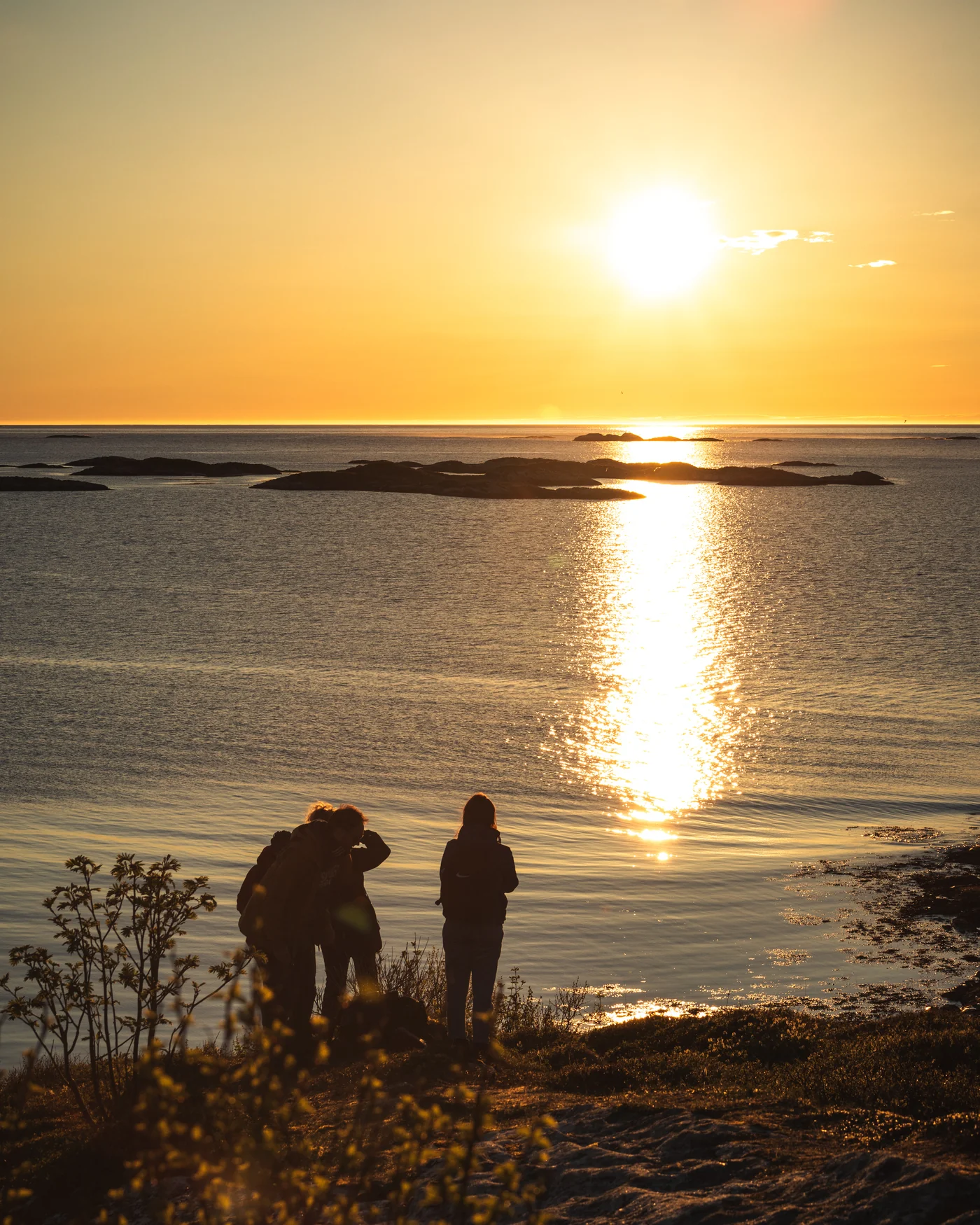
Hiking under the midnight sun
The mountains around Tromsø are best in summer. The most popular hike, Sherpatrappa up to Storsteinen, is open year-round, but in summer you can walk it at eleven at night in full daylight. Less popular but more rewarding are Tromsdalstinden, the iconic peak across the bridge from the city centre at 1,238 metres for a full day, and Floya at 688 metres for a half day with the best views over the harbour. Bring layers; the wind on the ridges is real.
Sea kayaking in the fjords
Mid-May to late July is sea kayaking season in the fjords. The water is cold, around four to eight degrees Celsius, so it is done with drysuits or wetsuits and an experienced guide. The reward is paddling through still water with low gold light bouncing off the surface, often with no other boats in sight. This is what our Sommarøy Island Escape package is built around: three days based in central Tromsø, and one day on the island, kayaking.
Fishing in the white nights
Fishing trips in the white nights are uniquely Arctic. Cod, halibut, mackerel and sea bass are all in season. Local guides take small boats out at all hours. Going out at nine in the evening and returning at two in the morning is normal. The light makes the experience surreal; you are fishing in what looks like late afternoon, but it is the middle of the night.
Whale watching is not in season
One thing worth saying, because guests ask: whale watching is not in season in summer. Humpback and orca whales follow the herring into the fjords around Tromsø from November to January. In summer, the whales are further out at sea and not reliable for tourist boats. If whale watching is what you came for, come to Tromsø in winter, not summer.
Day trips to Sommarøy and Senja
Day trips to Sommarøy and Senja are easier in summer than in winter. Sommarøy, about an hour west of Tromsø, has white-sand beaches and turquoise water that looks Caribbean in good light, except that the air temperature is twelve degrees. Senja, slightly further south, has some of the most dramatic mountain coastline in Northern Norway. Both are accessible by road, and both are different kinds of beautiful in the midnight sun than in winter.
Fjellheisen at eleven at night
The Fjellheisen cable car runs until late in the evening in summer. Standing at the top of Storsteinen at eleven at night, watching the sun set over the fjord, is one of those Tromsø memories that stays with people. It is also far less crowded at that hour than during the day.
Where to stay in Tromsø for the midnight sun
Most visitors stay in Tromsø itself, which is the right call for a first trip. The city has restaurants, airport links, and the easiest access to most activities. Our default recommendation is Radisson Blu Tromsø: centrally located, within walking distance of almost everything we recommend.
Sommarøy: a second base
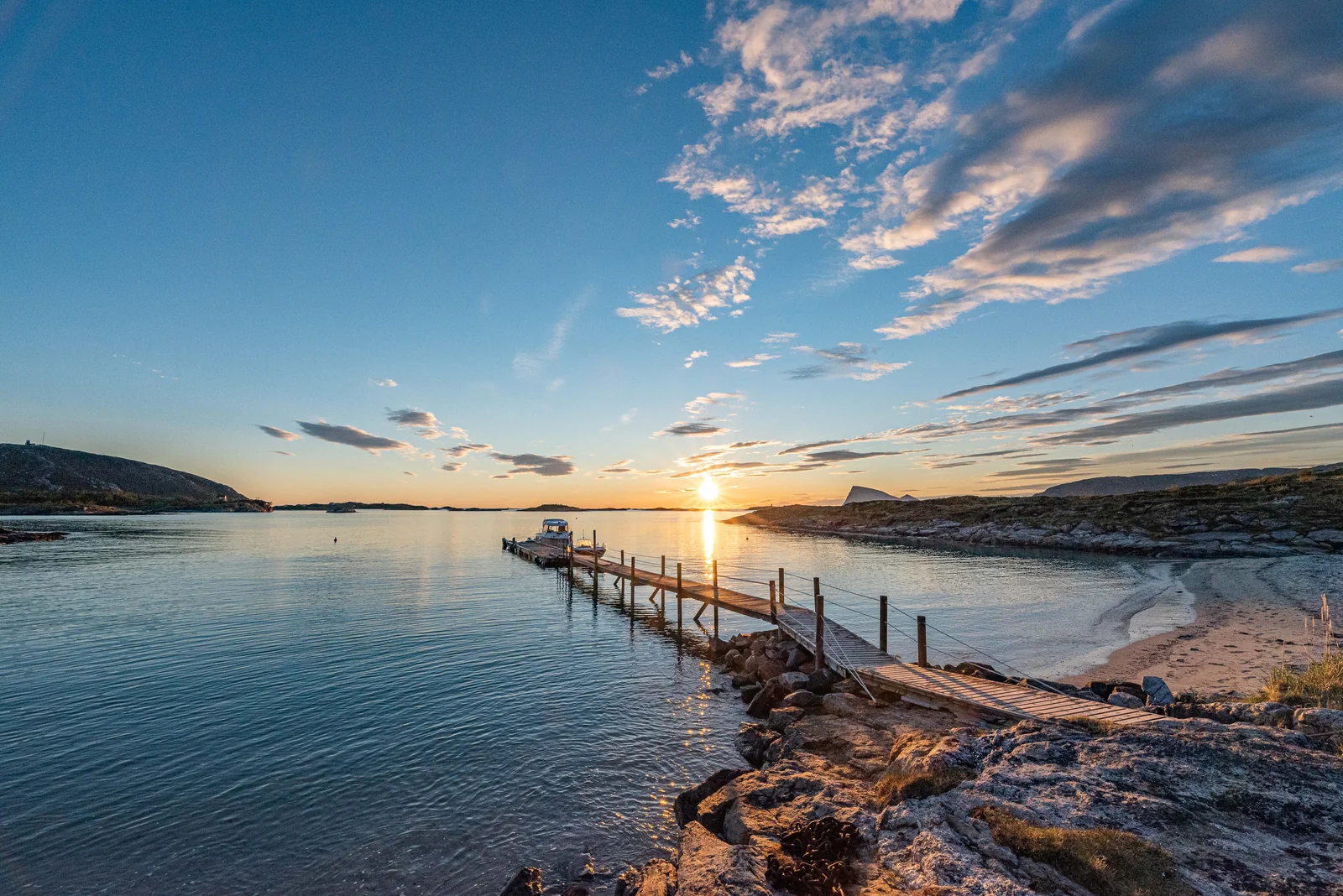
If you have four or more days and want a change of pace, Sommarøy is the natural second base. About fifty minutes by road, the islands feel like a different country: white beaches, low sky, fewer people. Sommarøy Arctic Hotel is the only proper hotel out there, and the building itself is built right onto the coastline.
Lyngen Alps for active travellers
For visitors with a serious appetite for mountains, the Lyngen Alps, an hour and a half east, are the most dramatic peaks in this part of Norway. Ski touring runs into late May, hiking opens fully in June, and the cabin scene out there is real but sparse. Lyngen is for active travellers who do not need much in the evenings.
Senja as a day trip
Senja to the south is well-suited for a single-day trip from Tromsø. It is located about three hours each way by car, but the scenery on arrival is unforgettable. Best done with a guide or in a rental car, not by public bus.
Practical planning
What to pack
Layering matters more in Tromsø summer than people expect. A wool or merino base layer (yes, even in June). A fleece or light insulated mid-layer. A windproof and waterproof outer shell. One pair of warm trousers, one lighter pair. Real walking shoes, not city sneakers. A buff or thin hat. Sunglasses, the midnight sun on a clear day is genuinely bright, and the low angle of light tires your eyes over a few days. And most importantly: a sleep mask, even if your hotel has blackout curtains. The light gets in.
How to sleep
Sleep is the single most underestimated part of a midnight sun trip. Bring a sleep mask, treat your room like a cave, and resist the urge to push your bedtime later just because the sky says you can. The first forty-eight hours are the hardest. After that, your body adjusts.
Weather expectations
Weather expectations matter. Tromsø in summer is unpredictable. A trip in late June 2026 could be twenty degrees and clear; the same week in 2025 was eight degrees and raining. Plan for the cool, rainy version. If you get the warm sunny version, that is a bonus, not the baseline.
Connectivity and transport
Cell coverage is strong in Tromsø itself, intermittent on day trips to Sommarøy and Senja, and patchy on long hikes. Download offline maps before going out for the day.
Getting around the city is easy on foot. The airport (TOS) is a ten-minute drive from the centre. Public buses run frequently; rental cars are useful for day trips to Senja or Lyngen, but not necessary in town.
Booking timing
For accommodation, book three to six months out if you are travelling around the summer solstice or the marathon weekend in late June. Outside those windows, six to eight weeks ahead is usually enough.
Midnight sun versus polar night
Most people who come to Tromsø in summer have already heard about polar night, or are considering coming back in winter. It is worth understanding how different the two are.
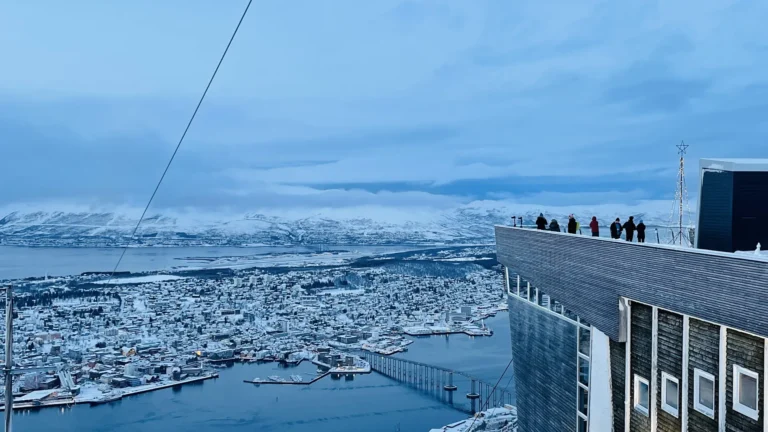
Polar night runs from late November to mid-January. The sun does not rise above the horizon at all. The city is lit by long blue twilight, snow on every surface, and occasional aurora. It is quiet, internal, and cold. It feels like a city in deep meditation.
Midnight sun is the opposite. Bright, awake, active. The light pushes everyone outside. The atmosphere is more like a Mediterranean coastal town in August than the Arctic stereotype.
Many guests who come for one will eventually come back for the other. They are genuinely different experiences in the same city. If this is your first Arctic trip and you have to choose, the question is really about what you want from it. Is it aurora and quiet introspection, or hiking and 24-hour daylight? We have written a full guide to Tromsø in winter for guests considering the other side of the year; for the opposite season, see our Tromsø in summer guide.
How HD Arctic plans a midnight sun trip
Our concierge approach to a summer trip in Tromsø starts with one question: Do you want one base or two? Visitors who want one base stay central in Tromsø and day-trip out from there. Visitors who want two, get a few days in the city for the restaurants and the cable car, then move out to Sommarøy or Lyngen for the second half.
Our Sommarøy Island Escape is the standard package, with kayaking, hiking, and time built in for the slow summer Tromsø deserves. For groups who want something different, our concierge service is built to design around what you actually want from the trip rather than what is on the standard menu.
If you are reading this in May and considering a trip this summer, you can still get it done. June and early July fill up by April most years, but August and the late shoulder season still have availability, and the light only fades gradually until mid-August. If you are reading this in winter and thinking about next summer, we recommend booking by February or March for the solstice weeks.
The midnight sun is not magic. It is geography. But the way it changes a place, and the people in it, for a couple of months a year, is worth being there to see.