
There is no single best time to visit Tromsø. There is only the best time for the trip you actually want. Someone hoping to stand under the aurora wants the opposite of someone who wants to hike a fjord ridge at midnight, and both are right. This guide is built to help you match the season to the trip, with honest weather figures and no pretending that every month is equally good for everything.
We live here and run trips through every season, so most of what follows is what we would tell a friend who asked. Tromsø sits at 69° north, roughly 350 kilometers above the Arctic Circle, and that latitude is the reason the year here is split into genuine extremes rather than four mild seasons. The sun disappears completely for part of winter and refuses to set for part of summer. Everything else follows from that.
When to visit Tromsø: which season for what
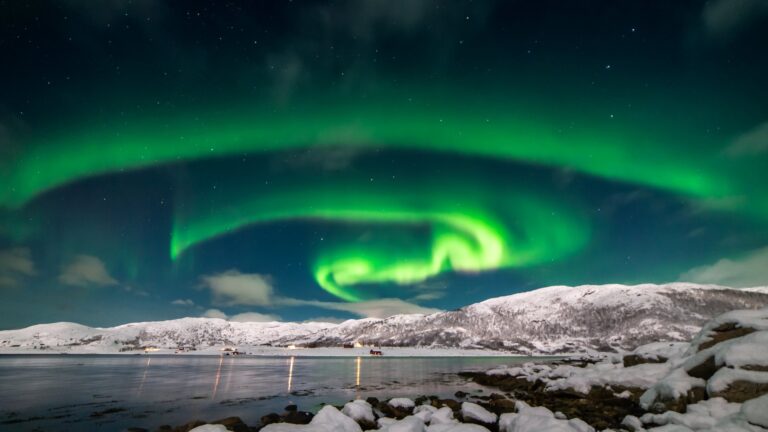
If you want the northern lights, come between late September and late March, with the core of the season running from November through February. If you want the midnight sun and long active days outdoors, come between late May and late July. The shoulder months on either side, April and May, then September and October, are quieter and often better value, and each offers a real version of Tromsø rather than a compromise.
Here is the trade-off in one line. Winter gives you aurora and snow, but short, cold days and peak-season crowds. Summer gives you endless daylight and easy hiking, but no chance of the aurora at all. Spring and autumn sit between the two, with fewer visitors and a mix of conditions.
The rest of this guide breaks each of those down so you can decide with the full picture rather than the postcard version.
Winter in Tromsø: November to March
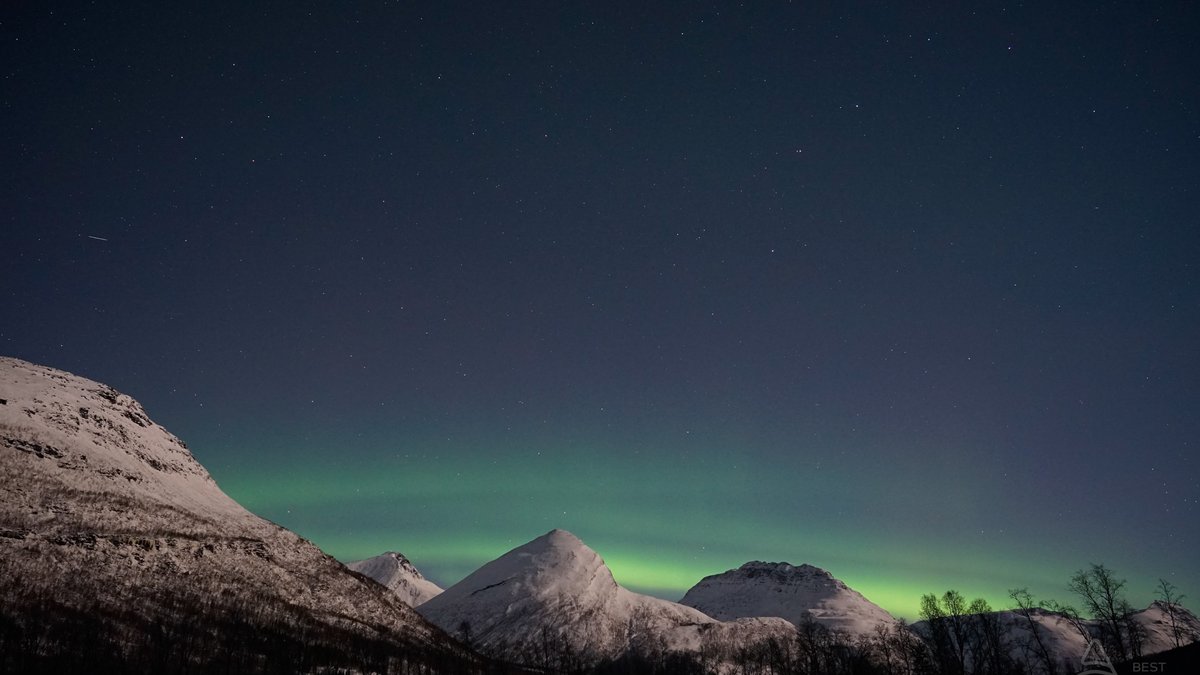
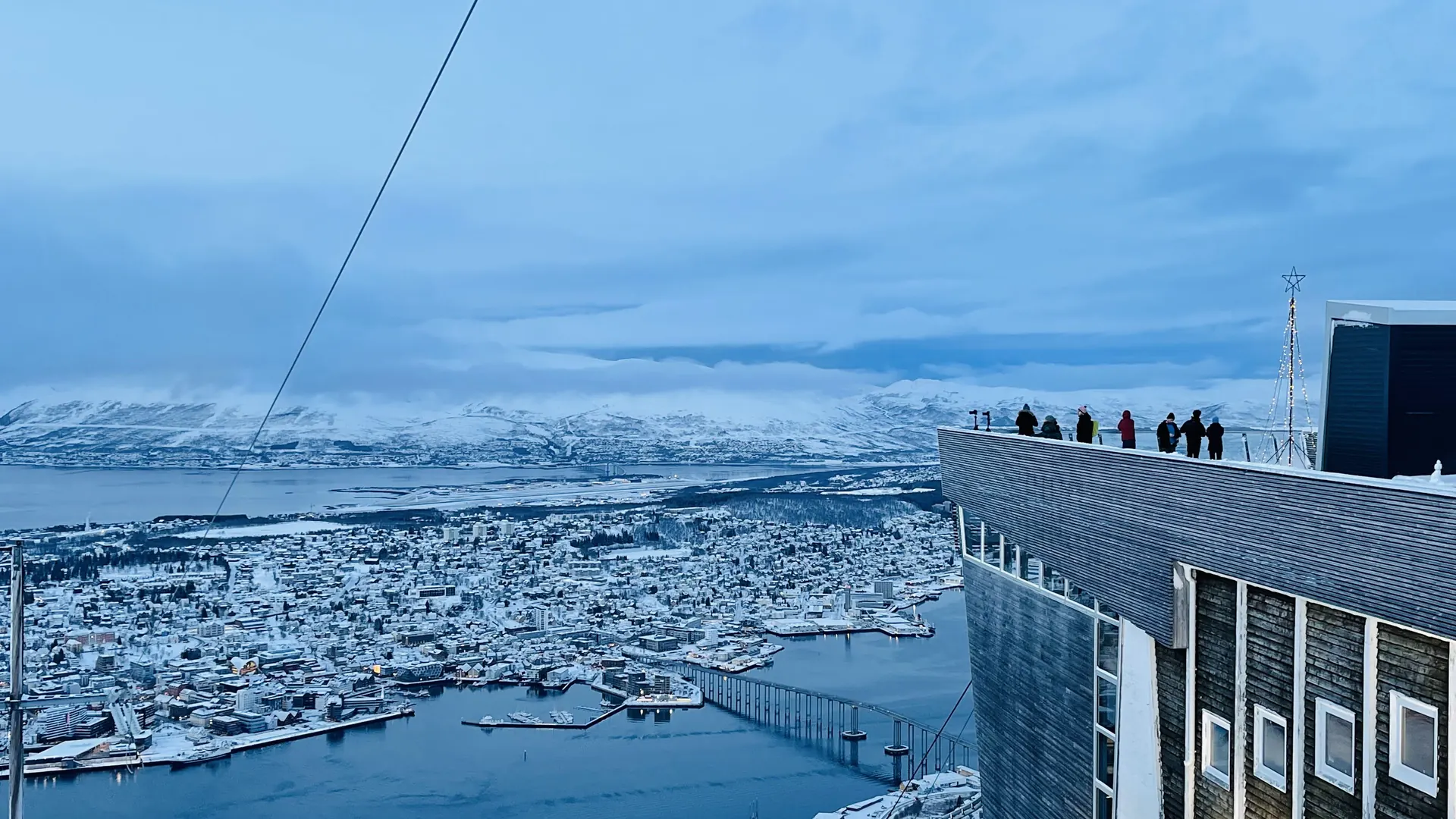
Winter is what most people picture when they think of Tromsø, and it is the busiest part of the year for good reason. From November onwards, the city is reliably snow-covered, the nights are long and dark, and the aurora has the darkness it needs to show clearly.
The cold is milder than the latitude suggests. The Gulf Stream keeps Tromsø far warmer than other places this far north, so daytime temperatures through the depth of winter usually sit between roughly -3°C and -5°C, and drop several degrees lower at night (yr.no). It is still cold on clear days, but it is a manageable cold with the right clothing, and it is nothing like the -20°C and below that places at the same latitude in Alaska or Siberia endure.
Winter is also peak season, and that is the honest caveat. December and January in particular fill up. Hotels, restaurants, and the better tours book out well in advance, and the city center is busy with visitors. If you are picturing a silent, empty Arctic town, that is not winter Tromsø. The quiet of winter in Tromsø is in the landscape and the light, not in the streets.
December through February is the strongest stretch for aurora and the most atmospheric time to be in the city. March is an underrated choice: the days have lengthened noticeably, the cold is easing, and the aurora is still active, which makes it a good compromise for anyone who wants winter without the deepest dark or the highest prices. For the full picture, including how the early winter, polar night, and bright winter periods differ, see our guide to Tromsø in winter.
Spring in Tromsø: April and May
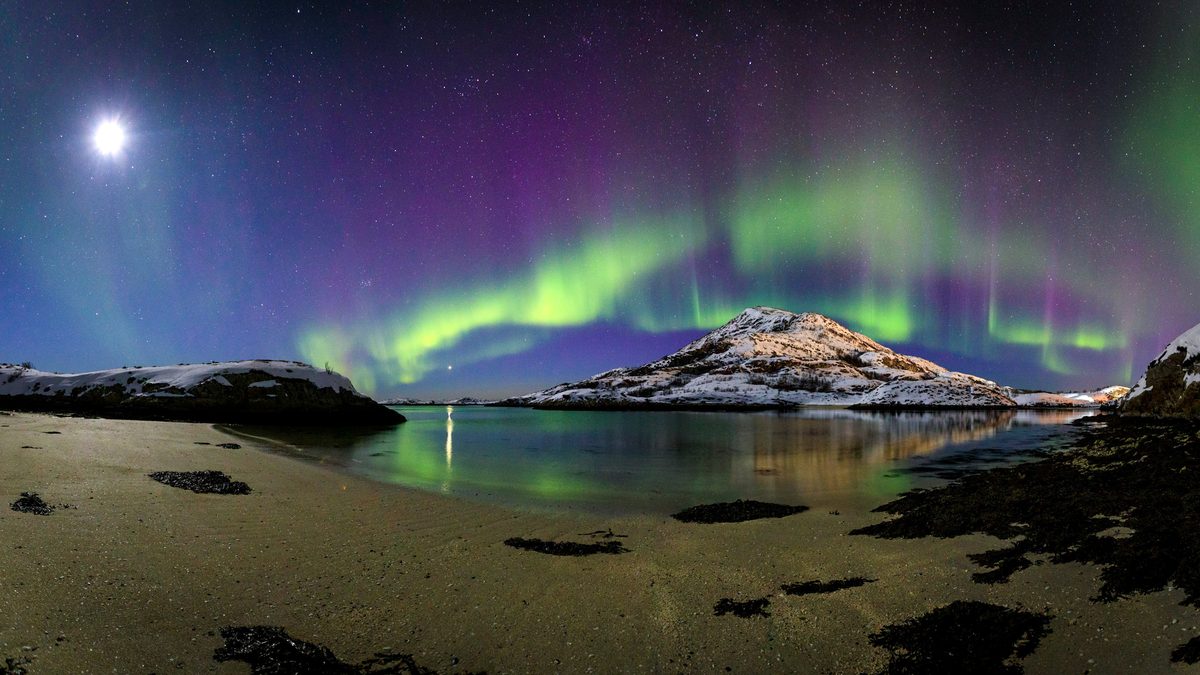
Spring is the shoulder season that most visitors overlook, and that is exactly why it is worth considering. By April, the daylight has returned in force, the snow is still on the ground and in the mountains, and the deep cold has loosened. You can still see the aurora in early April on dark nights, and you can still snowshoe and dog-sled, but you are doing it in daylight rather than darkness, and with far fewer people around.
May is a month of fast change. Early May still feels like late winter in the mountains, while by the end of the month, the midnight sun has begun, and the city tips into summer. The midnight sun period in Tromsø starts around 20 May (Visit Tromsø), so the last third of the month already brings round-the-clock light.
The weather in spring is genuinely unpredictable, more so than in winter or high summer. A spring day in Tromsø can move from clear sun to wet snow and back again. You should pack for both, not just one. What spring offers in return is a Tromsø with breathing room: lower prices, available tables, and a city that is not at full capacity.
Summer and the midnight sun: late May to July
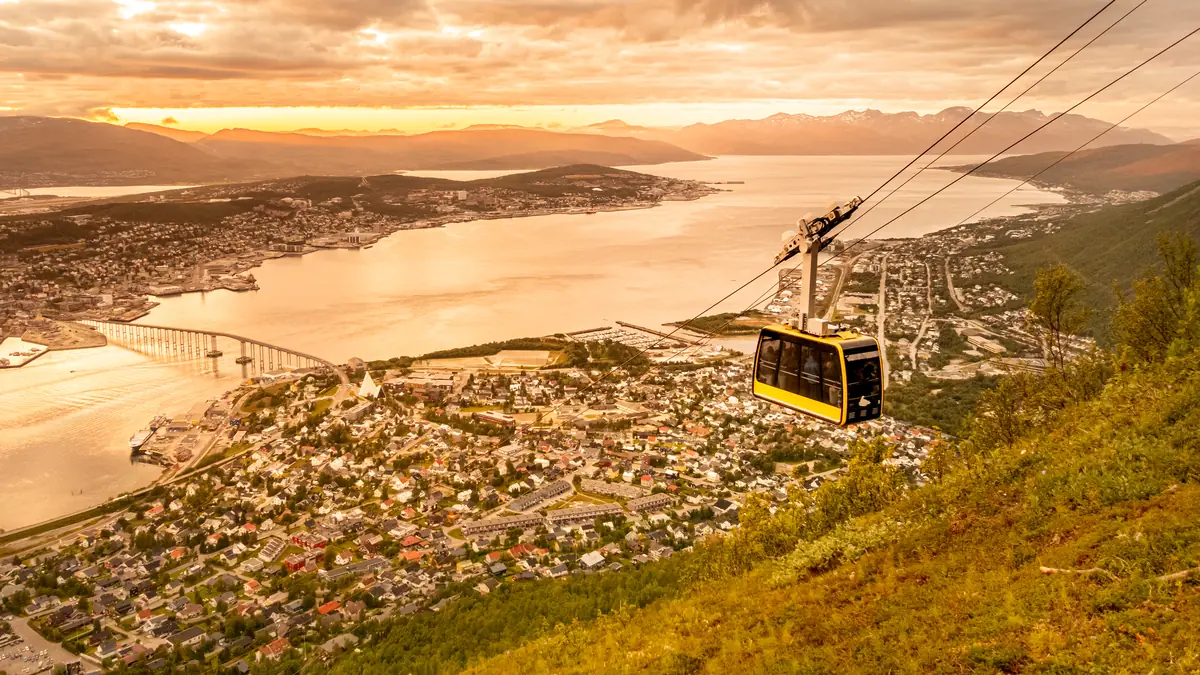
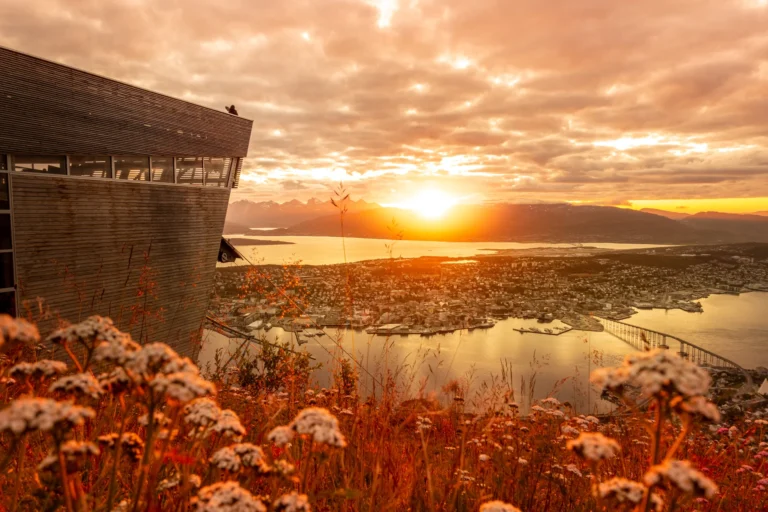
From around the 20th of May to late July, the sun does not set in Tromsø. It circles the sky without dropping below the horizon, and midnight feels like a soft late afternoon. This is a different city from the winter one, and many visitors never picture it at all.
Summer temperatures are cool rather than warm. July is the warmest month, with daytime highs typically in the low to mid-tens Celsius, occasionally rising with brief warm spells. Nights stay cool. This is not a beach climate, and you should come expecting fresh air and changeable weather rather than heat.
What summer gives you is time. With no darkness to end the day, you can hike, kayak, fish, or sit out by the water at any hour, and the light stays generous the whole time. The fjords are open, the mountains are walkable, and the rhythm of the city shifts to match the light. There is no chance of the aurora in summer, because there is no darkness for it to appear against, and that trade-off is absolute. You are choosing daylight instead.
If you’re leaning toward the bright months, our Tromsø in summer guide covers what the season is actually like.
Autumn in Tromsø: September and October
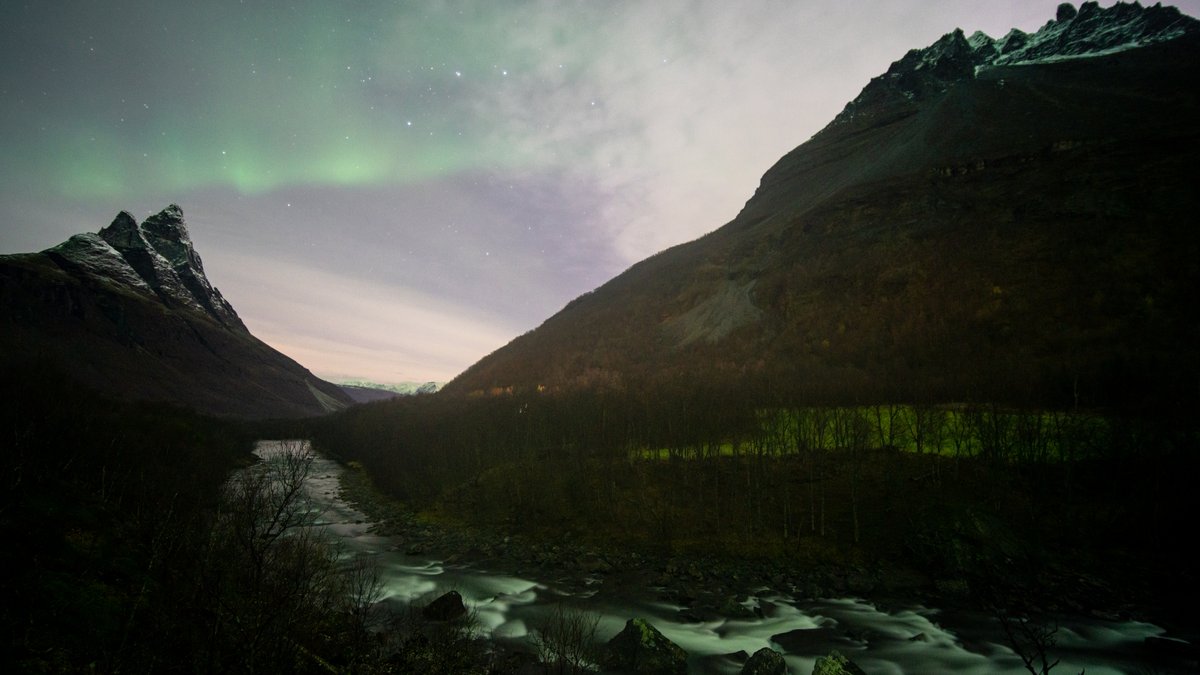
Autumn is the other shoulder season, and for some visitors it is the quiet favourite. September brings autumn colour across the mountainsides, cooler fjord air, and the return of real darkness, which means the aurora becomes visible again from late September. October deepens all of that: longer nights, the first snow on the high ground, and crisp, clear viewing conditions on good nights.
The trade-off in autumn is rain. October is statistically one of the wettest months in Tromsø, so you should expect grey, wet stretches alongside the clear nights. A clear, cold October night is one of the best aurora-viewing conditions of the entire year, but you cannot order one, and you should plan for patience.
Autumn is a good choice for travellers who want to see the aurora without the full winter freeze, prefer lower prices than in December, and do not mind weather that calls for a waterproof shell.
Polar night and midnight sun: the two extremes
Tromsø’s year is defined by two periods that have no equivalent anywhere else in the world, and understanding them is the key to deciding when to come.
The polar night, or as locals say “mørketid”, runs from roughly the 27th of November to the 15th of January (Visit Norway). During these weeks, the sun never climbs above the horizon. This does not mean total darkness, which is the common misunderstanding. Instead, the days are a long blue-and-rose twilight that many locals consider the most beautiful light of the year. It is a calm, dim, atmospheric period rather than a black one, and it is the most reliable stretch for aurora.
The midnight sun runs from roughly the 20th of May to the 22nd of July. For these weeks, the sun stays above the horizon for all 24 hours. The light is constant and golden, and the main practical challenge is sleep, since the body takes a few nights to adjust to a sky that never darkens. Blackout curtains and an eye mask are worth packing.
Between these two extremes, the daylight swings dramatically. Tromsø goes from no sun at all to no night at all in the space of about five months, and the spring and autumn shoulder seasons are simply the steep slope between them.
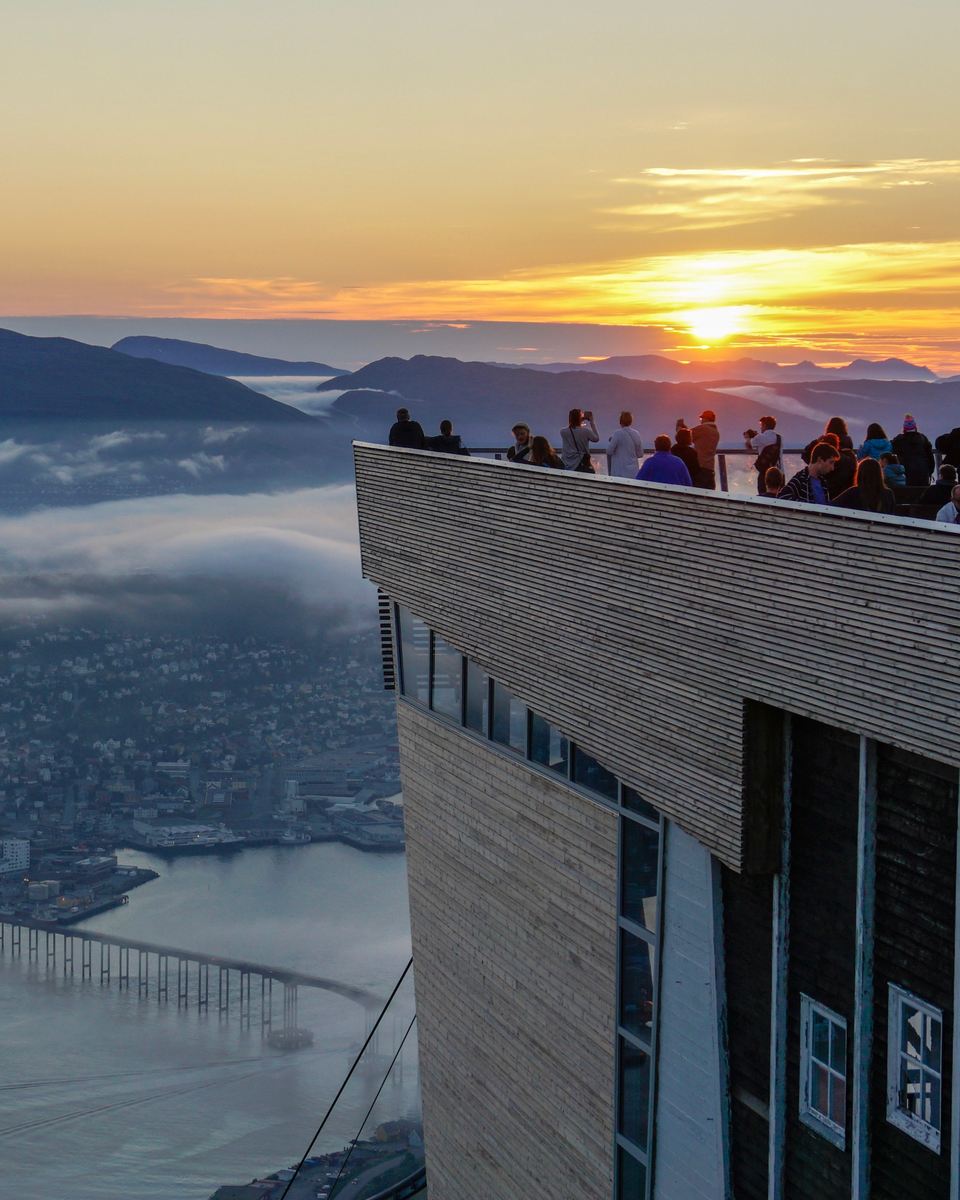
Tromsø weather and climate, month by month
Tromsø has a subarctic climate: long, cold, snowy winters and short, cool summers. The sea keeps it milder than the latitude implies, but it also keeps it wet, with rain and snow possible in every month of the year. The figures below are drawn from long-term climate records and are useful for planning, though any individual week can depart from the average.
Winter, from December to February, brings average daytime temperatures around -3°C to -5°C, with colder nights and reliable snow cover. These are the darkest and coldest months, with the polar night falling across December and early January.
Spring, from March to May, is a climb. March still sits near -2°C on average, while May reaches roughly 5°C, and daylight expands rapidly across these months from short to round-the-clock.
Summer, June to August, is the mild season, with July averaging around 12°C and occasional warmer spells. It is the most comfortable weather for being outdoors, though rain is still common.
Autumn, from September to October, cools steadily and is the wettest part of the year, with October typically the single rainiest month. Snow returns to the high ground through this period and reaches the city by November.
One constant runs through all of it: Tromsø is wet. Annual precipitation is high and spread evenly throughout the year, so a waterproof outer layer is not a winter item here; it is a year-round one.
Daylight hours through the year
Daylight is the single biggest variable in a Tromsø trip, and it changes faster here than almost anywhere people travel to.
In the depth of the polar night, around the winter solstice, there is no sunrise at all, only a few hours of dim blue twilight in the middle of the day. By March, daylight has returned to roughly twelve hours, climbing steeply week by week. From late May to late July, there is no true night, with the sun up for the full 24 hours. After the midnight sun ends in late July, darkness returns just as quickly, and by late September, the nights are long enough for aurora again. By December, the city is back in the polar night.
The practical point is that the month you choose does not just change the weather, it changes the entire shape of the day. A winter visitor plans around a few hours of usable light. A summer visitor has no closing time at all.
What to pack in Tromsø, by season
The clothing principle in Tromsø is the same in every season, and only the weight changes. Dress in layers: a base layer against the skin, an insulating mid layer, and a windproof, waterproof outer shell. Leave cotton at home, because once it gets wet here, it stays wet and cold for the rest of the day, and in Tromsø, it will get wet.
For winter, that means a wool base layer, a warm fleece or wool mid-layer, a proper insulated and windproof shell, plus a hat, gloves, a scarf, and warm waterproof boots. Many winter tour operators provide thermal outer suits for activities, so check what is included before you over-buy.
For summer, the same layering logic applies in lighter form. Daytime can be mild, but evenings and the water are cool, and weather changes quickly, so a warm mid-layer and a waterproof shell still belong in the bag even in July. For the midnight sun, add a sleeping mask and expect to want blackout curtains where you stay.
For spring and autumn, pack for both ends of the range. These shoulder seasons can swing between near-winter and near-summer conditions within a single trip, and the safest approach is a winter setup with the option to shed layers.
When to visit Tromsø: FAQ
What is the best time to visit Tromsø overall?
There is no universal answer, because it depends on the trip. For the northern lights, the best time is late September to late March, with November to February as the core. For the midnight sun and active outdoor days, the best time is late May to July. For lower prices and fewer visitors, the shoulder seasons of April to May and September to October are the strongest value.
When is the best time to see the northern lights in Tromsø?
The aurora season runs from late September to late March. The lights are present throughout, but they need darkness and clear skies to be visible, so the long, dark nights of the polar night period give the most reliable conditions. No month can guarantee a sighting, because clear weather and solar activity both have to cooperate.
Is Tromsø worth visiting in summer?
Yes, though it is a completely different trip from the winter one. Summer offers the midnight sun, open fjords, and long days for hiking and being on the water, with no darkness at all. The trade-off is that there is no chance of seeing the northern lights.
What is the coldest and wettest time of year in Tromsø?
The coldest months are December through February, with average daytime temperatures around -3°C to -5°C. The wettest stretch is autumn, with October typically the single rainiest month, though rain and snow are possible year-round.
Which months are quietest in Tromsø?
The shoulder seasons, April to May and September to October, are the quietest and generally the best value. December and January are the busiest, since they are peak aurora season.