
August is the quiet turn of the Arctic year. The midnight sun is gone, but real darkness hasn’t arrived yet. The mountains are green and walkable, the water is as warm as it gets up here, and on the last clear nights of the month, the first northern lights of the season can appear over a city that’s still in summer mode. It’s one of the easier months to like, as long as you come for the long light and the hiking, and treat the aurora as a bonus rather than a plan.
If you’re still deciding when to come, this is one month out of our complete guide to when to visit Tromsø — the place to start if you want to compare the seasons side by side.
The light in August
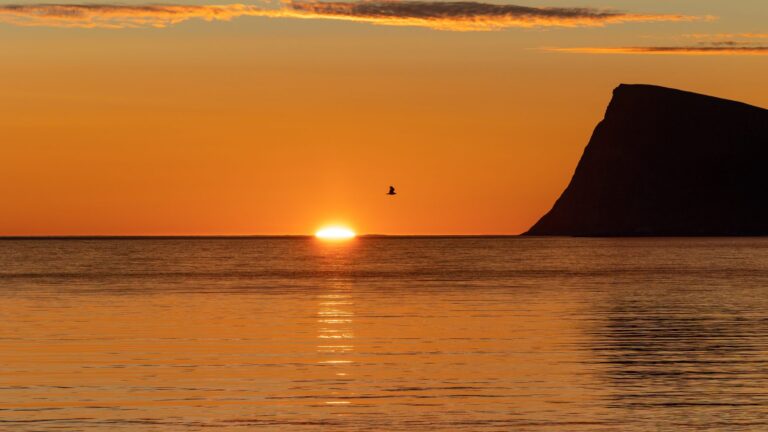
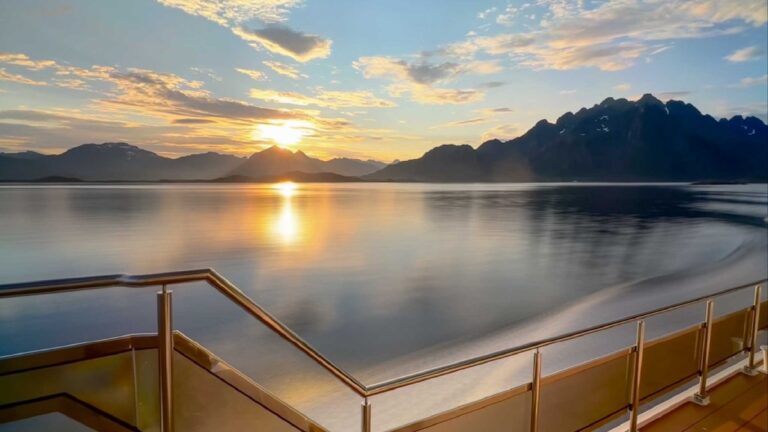
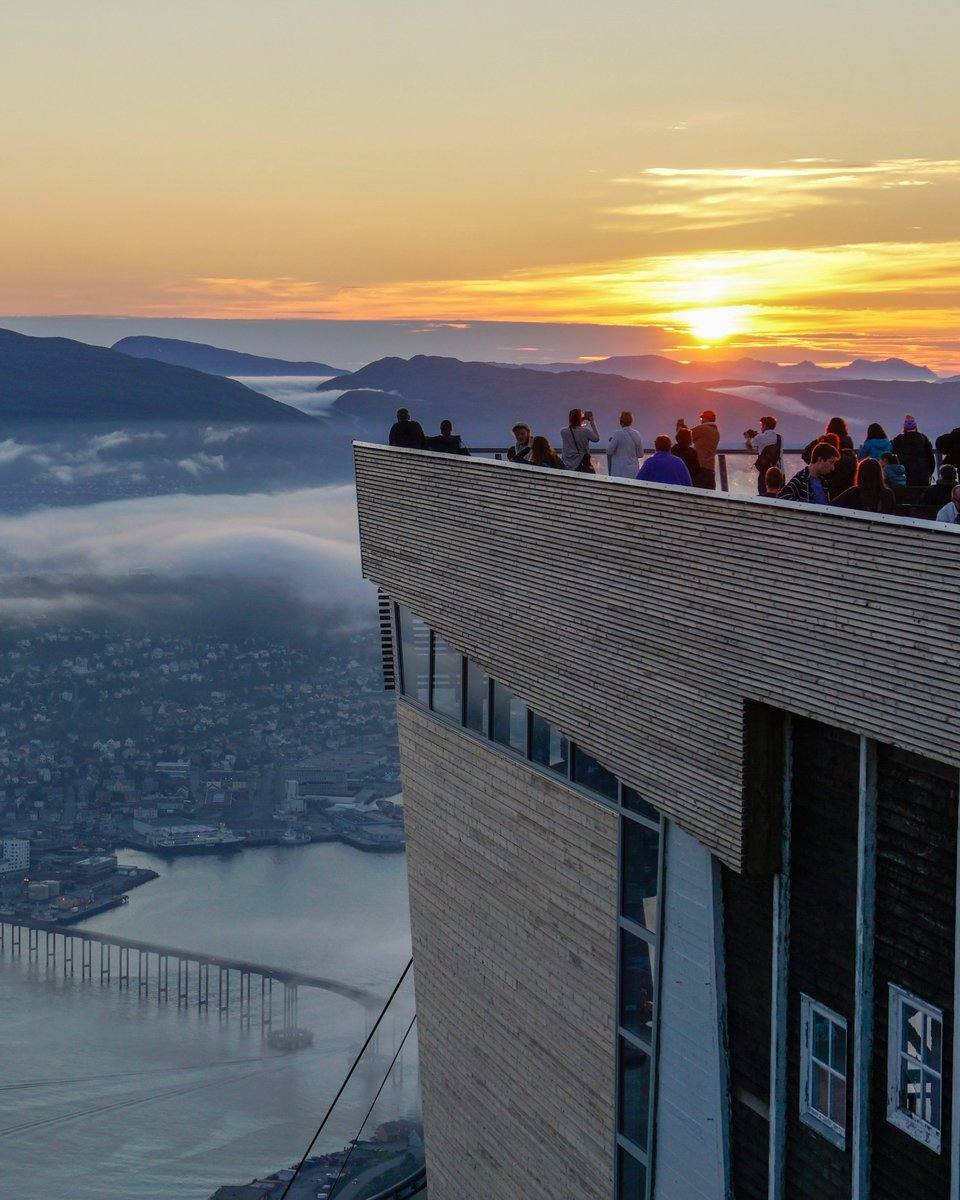
The midnight sun ends in Tromsø around 22 July, so by August the sun does set again. But “sets” is generous early in the month. In the first week or so, it dips below the horizon for a short while and leaves a long, bright twilight behind it. The sky never goes properly dark, and you can still walk a fjord trail at one in the morning without a headlamp.
That changes through the month. By late August, real night has returned: a few hours of genuine darkness, enough for the first faint aurora on a clear night. Daylight drops from roughly twenty hours at the start of the month to around fifteen by the end (timeanddate). If you want the bright-night feeling, come early. If you want a shot at the lights, come late.
For the full picture of the bright half of the year, see our guide to the midnight sun in Tromsø.
Weather and temperature
August is one of the warmest months in Tromsø, which in Arctic terms means daytime highs around 13–15°C and nights near 8–9°C (met.no). It’s also one of the wetter months. Rain comes in off the sea on short notice, and a clear morning can turn grey by afternoon.
None of this is a problem if you’re dressed for it. The mistake people make in August is packing for “summer” and getting caught out by a cold, wet day on an exposed trail. Bring layers and a real waterproof shell, and August is comfortable.
Northern lights or midnight sun in August
This is the month that sits on the seam between the two. The midnight sun is over, and for most of August, the sky is too bright for aurora; there simply isn’t enough darkness. Then, in the last week or so, the nights get dark enough that a strong display can show through on a clear night.
So: possible, but not reliable. We don’t run dedicated aurora chases this early because the odds don’t justify a late-night out for most of the month. If you’re set on the northern lights, September onward is the honest answer, and our complete northern lights guide walks through how the season actually works.
What’s on Tromsø in August
August is calmer than midsummer for events. Tromsø’s big open-air festival runs in July, so by August the city has settled back into its own rhythm — markets, the tail end of the summer season, and the start of the berry harvest in the hills.
Because festival dates and one-off events shift year to year, check the current calendar on Visit Tromsø before you build a day around something specific.
What to do in August
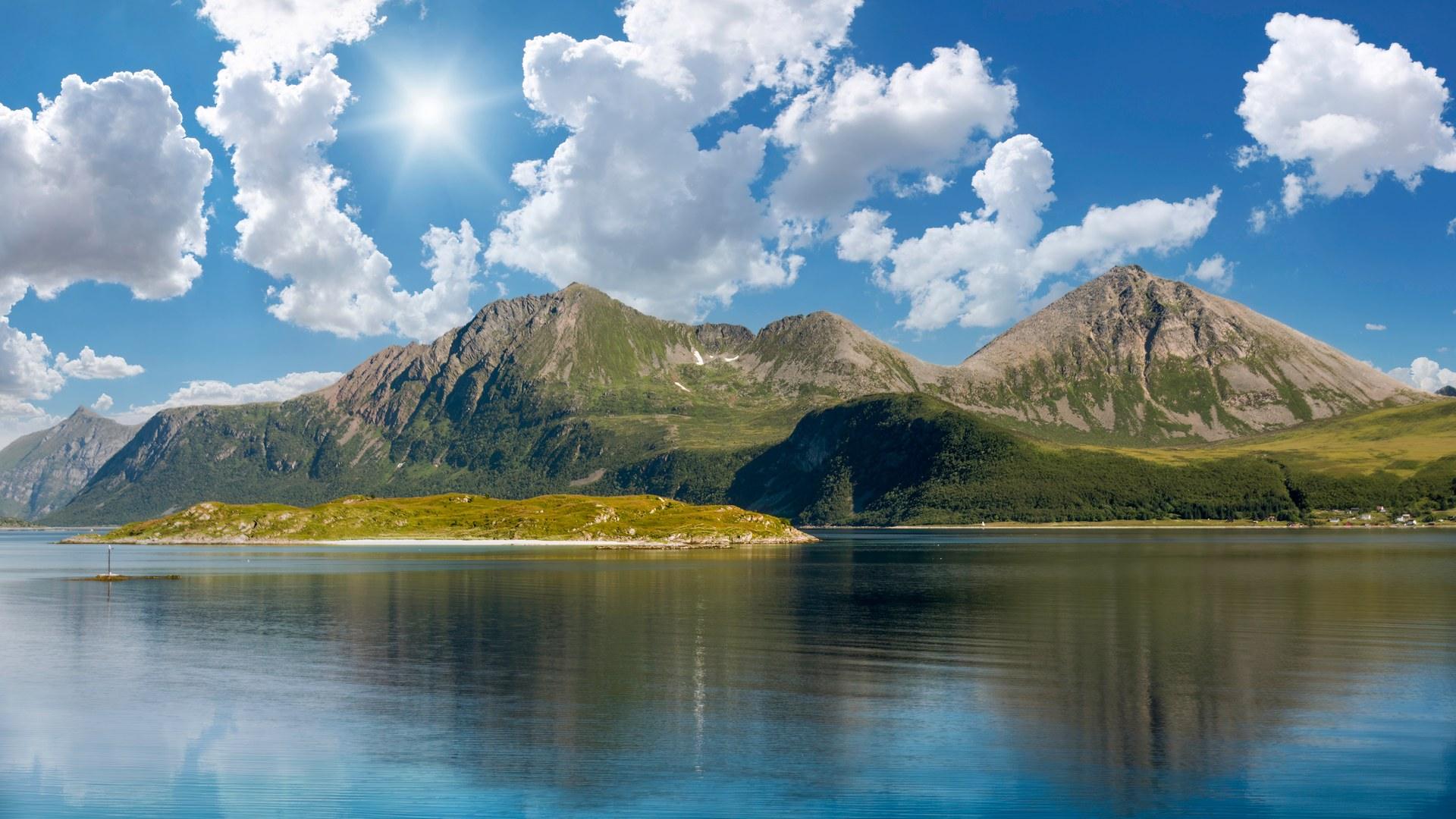
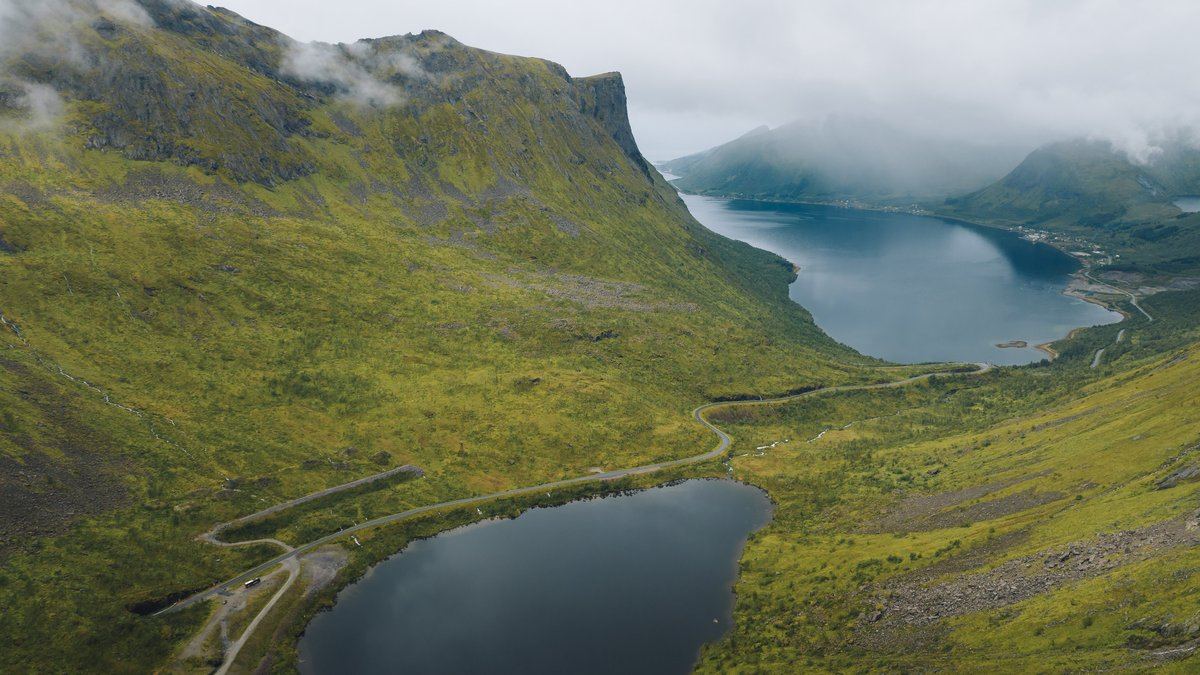
This is the best month of the year for being in the mountains. The snow is long gone from the trails, the heather is out, and the classic walks are all open. The Sherpa steps up toward Fløya, the ridges above the city, the cable car to Storsteinen for the view without the climb.
Beyond the hiking, August is a strong fjord and island month: sea kayaking on calm evenings, day trips out to Sommarøy and Kvaløya for the white-sand beaches and turquoise water, fishing, and the longer run over to Senja if you have the time. Whale watching isn’t in season yet; that starts in late autumn, so don’t come in August expecting it.
If you’d rather not stitch the logistics together yourself, this is exactly the kind of late-summer trip we put together through HD Arctic Concierge, built around the hiking and the long light, with the connecting pieces handled.
What to pack
Layers, and a waterproof shell you actually trust. A wool or synthetic base layer, a fleece or light insulated mid-layer, and a hard shell will cover almost any August day. Add proper hiking boots if you plan to be on the trails. They get muddy after rain.
Two small things people forget: a sleep mask, if you’re here in the first half of the month when the nights are still bright, and a layer against midges near the water and inland on still evenings. Sunglasses are more useful than you’d expect this far north.
Crowds and prices
August is the gentle end of the summer high season. The first half still carries European school-holiday traffic, but once that winds down around mid-month, the city quiets and prices ease. The aurora crowds haven’t arrived yet either, that build-up starts in autumn.
The result is that late August is one of the better-value windows of the year: long days, open trails, warmer water, and noticeably less competition for accommodation and tours than July or the dark-season months.
Is August a good time to visit Tromsø?
Yes, if you’re coming for the landscape rather than the lights. August suits hikers, fjord-and-island travelers, and anyone who wants long, soft daylight and lower prices without committing to deep winter. The late-month chance of a first aurora is a real bonus, and the green, walkable mountains are at their best.
It’s the wrong month if your whole trip hinges on the northern lights. For that, wait for the dark season. But as a quiet, active, good-value way to see Arctic Norway at its greenest, August is hard to fault.
For the wider experiential feel of the bright months, read our companion piece on Tromsø in summer.
Tromsø in August: FAQ
Can you see the northern lights in Tromsø in August? Only at the very end of the month, and only on a clear, dark night. For most of August the sky is too bright. If the aurora is your priority, plan for September or later.
How warm is Tromsø in August? Daytime highs are around 13–15°C, while nights are closer to 8–9°C. It’s among the warmest months here, but rain is common, pack a waterproof shell.
Is August a good time to visit Tromsø? It’s a strong choice for hiking, fjord trips, and long daylight at lower prices than midsummer, especially in the second half of the month. It’s a weak choice if you’re set on seeing the northern lights.